Bringing them Home - Chapter 24
Human Rights and Equal Opportunity Commission ReportBringing them HomeReport of the National Inquiry into the Separation of Aboriginal and Torres Strait Islander Children from Their Families
|
 |
Part 6 Contemporary Separations
- Chapter 20 Introduction
- Chapter 21 Child Welfare Care and Protection
- Chapter 22 Adoption
- Chapter 23 Family Law
- Chapter 24 Juvenile Justice
- Chapter 25 Underlying Issues
- Chapter 26 A New Framework
Chapter 24 Juvenile Justice
- The processes of juvenile justice separations
- Juvenile justice legislation
- Juvenile justice policy and program responses
- Causes of separation
- Conclusions
Juvenile Justice
The juvenile justice system is mimicking the separation policies of the past (Western Aboriginal Legal Service (Broken Hill) submission 775).
The most distressing aspect about the level of juvenile justice intrusion in the lives of young Aboriginal and Torres Strait Islander people is the fact that entry into the system is usually the start of a long career of incarceration for many (SNAICC submission 309 page 28).
The removal of Indigenous children and young people can occur by way of juvenile justice intervention either through the use of police custody or through the incarceration of a young person in a juvenile detention centre. The length of separation can vary from a few hours or days to months or years. However, as submissions to the Inquiry noted, the effects of the separation can last a lifetime.
The disproportionate number (or over-representation) of Indigenous children and young people in the juvenile justice system and in particular in detention centres has been recognised for two decades. One of the earliest attempts to assess its level occurred in 1977 during a symposium organised by the then Commonwealth Department of Aboriginal Affairs on the care and treatment of Indigenous young people in detention centres (Sommerlad 1977). During the 1980s there were numerous reports which outlined the over-representation of Indigenous young people in various State or Territory jurisdictions (Cunneen and Robb 1987, Semple 1988, Gale et al 1990, Cunneen 1990). These studies indicated Aboriginal over-representation in police interventions, in court appearances and in juvenile detention centres.
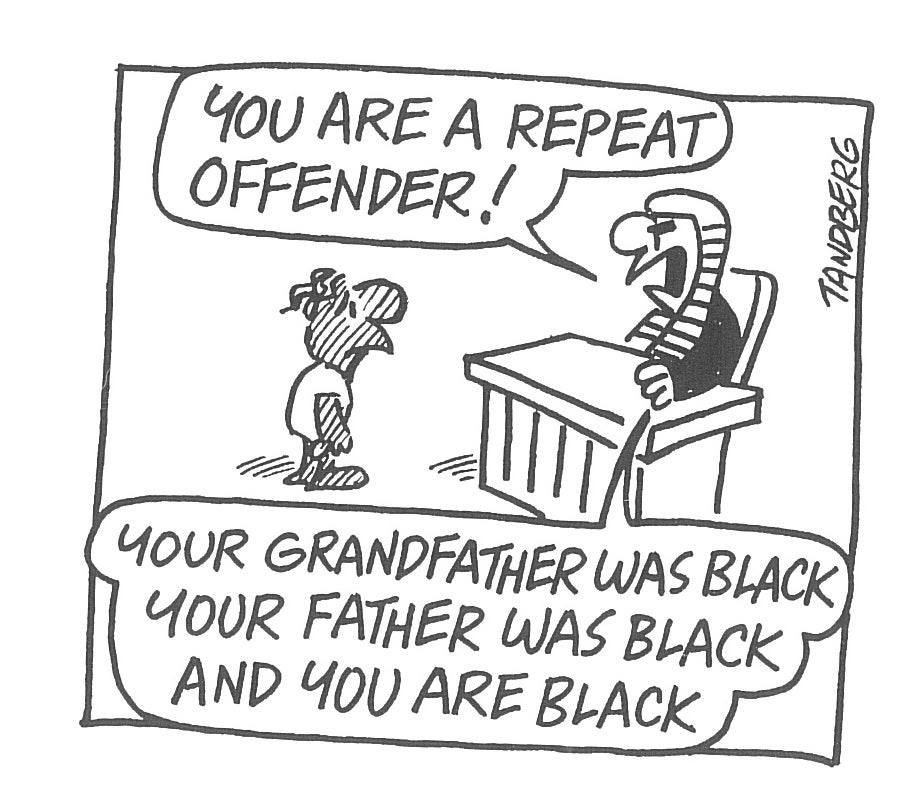
Aboriginal child care agencies and Aboriginal legal services throughout Australia consistently drew attention during the 1980s to the problems associated with the high levels of criminalisation of Indigenous youth (D'Souza 1990). Some commentators argued that the over-representation of Indigenous young people in juvenile corrections represented a continuation of earlier removal policies by way of a process of criminalisation (Cunneen 1990 and 1994, O'Connor 1994). Aboriginal organisations supported this interpretation in submissions to the Inquiry (see ALSWA submission 127, Western Aboriginal Legal Service (Broken Hill) submission 775 and SNAICC submission 309). Also supporting this argument is research in most Australian jurisdictions indicating not only that Indigenous young people are over-represented in the juvenile justice system but that they are most over-represented at the most punitive end of the system, in detention centres (Gale et al 1990, Wilkie 1992, Crime Research Centre 1995, Luke and Cunneen 1995, Criminal Justice Commission 1995). This phenomenon is now recognised by many governments (for example, Queensland Government interim submission page 90).
During the 1980s and early 1990s many Indigenous communities grappled with developing alternative mechanisms for dealing with young people who offend. These alternative Indigenous mechanisms have tended to be localised, inadequately funded and without any legislative base. However, a key principle in these developments has been implementing self-determination at the grass roots level. In other words, communities have continually sought their own solutions to the problem of the over-representation of Indigenous young people in the juvenile justice system (Dodson 1995, Dodson 1996, Cunneen and White 1995 pages 152-3).
The principle of self-determination and the need for the development of Indigenous community responses to deal with Indigenous young people were fundamental to the main recommendation from the Royal Commission into Aboriginal Deaths in Custody designed to prevent the removal of Indigenous youth through juvenile justice or welfare intervention. Recommendation 62 called on governments to negotiate with Aboriginal communities and organisations to find solutions. ATSIC has reminded the Inquiry of the importance of this recommendation (submission 684 page 42).
|
Aboriginal and Torres Strait Islander peoples please be aware that the following image may contain images of deceased persons. Click here to view a photo on
|
The processes of juvenile justice separations
- Police custody
- National Police Custody Survey, August 1995
- Young people in police custody in each State and Territory, August 1995
- Juvenile detention centres
- Young people in juvenile corrective institutions, 30 June 1996
- Level of over-representation for Indigenous youth, 30 June 1996
- Comparing males and females in juvenile corrective institutions, 30 June 1996
- Changing populations in juvenile corrective institutions
Police custody
The police play a pivotal role in the separation of Indigenous children and young people from their families and communities. The Inquiry has already documented this role in the history of removal policies. However, police still have a major function in bringing about separations. Most obviously, Indigenous children and young people are separated from their families and communities by being placed in police custody and held in watchhouses, lock-ups or cells.
The Australian Institute of Criminology specifically drew the links between past removal policies and contemporary use of police custody.
For many Aboriginal people, police officers taking children into custody and locking them in the cells, particularly in circumstances where this would not happen to a non-Aboriginal child, is a continuation of the practices of the past that have led to the Inquiry being established (submission 686 page 4).
The issue of Indigenous children and young people in police custody was addressed by the Royal Commission into Aboriginal Deaths in Custody. A key recommendation was `that, except in exceptional circumstances, juveniles should not be detained in police lock-ups' (Recommendation 242). The Convention on the Rights of the Child also requires that arrest and detention following arrest should be measures of last resort (article 37(b)). Alternatives should be utilised unless the circumstances are exceptional. An evaluation of State and Territory responses to Recommendation 242 found that it has not been adequately implemented (Cunneen and McDonald 1997 pages 182-184).
The Australian Institute of Criminology presented an analysis of the results of the August 1995 National Police Custody Survey which shows the extent to which police custody is utilised.
The significance of the survey's findings to the Inquiry is that they help to illustrate the continuing heavy involvement of Indigenous children (compared to non-Indigenous children) in the criminal justice system, in particular the elevated proportion of Aboriginal children being held in the cells by police (submission 686 page 2).
The following table shows the number and percentage of Indigenous and non-Indigenous youth aged 10 to 17 held in police custody nationally during the August 1995 survey period.
National Police Custody Survey, August 1995
| Indigenous youth | Non-Indigenous youth | Total | |||||
| Age | No | % | No | % | No | % | |
| 10 | - | - | 1 | 100 | 1 | 100 | |
| 11 | 4 | 57 | 3 | 43 | 7 | 100 | |
| 12 | 24 | 67 | 12 | 33 | 36 | 100 | |
| 13 | 65 | 59 | 46 | 41 | 111 | 100 | |
| 14 | 105 | 59 | 73 | 41 | 178 | 100 | |
| 15 | 151 | 44 | 190 | 66 | 341 | 100 | |
| 16 | 155 | 38 | 250 | 62 | 405 | 100 | |
| 17 | 200 | 30 | 474 | 70 | 674 | 100 | |
| Total | 704 | 40 | 1,049 | 60 | 1,753 | 100 | |
Note: It is not possible to distinguish Aboriginal from Torres Strait Islander young people in any juvenile justice data.
Some 40% of all young people held in police custody during the survey period were Indigenous. Indigenous children and young people comprise only 2.6% of the national youth population. In fact, the rate of custody per 100,000 Indigenous young people is 1,333 compared to a rate of 52 for non-Indigenous youth. The over-representation factor is 26.
The majority of children taken into police custody under the age of 15 years were Indigenous. That children of such a young age should be separated from their families, communities and community organisations is highly disturbing, particularly when such separations are not a feature of police interaction with non-Indigenous children. The issue of the relatively young age of Indigenous young people detained in police custody was raised by the ALSWA which told the Inquiry that one in five Indigenous young people detained in WA police cells was 14 years of age or younger. Of these 92% already had an arrest history (ALSWA submission 127 page 334).
The following table shows the distribution of police custody of young people by jurisdiction throughout Australia. Not all States and Territories resort to the use of police custody to the same extent. Nevertheless, the data demonstrate that over-representation of Indigenous young people in police custody is a significant problem and that there are differential patterns of policing Indigenous children and young people compared to non-Indigenous children and young people.
Young people in police custody in each State and Territory, August 1995
| Indigenous youth | Non-Indigenous youth | Total | ||||
| State | No | % | No | % | No | % |
| NSW | 108 | 36 | 192 | 64 | 300 | 100 |
| Vic | 16 | 7 | 209 | 93 | 225 | 100 |
| Qld | 176 | 42 | 245 | 58 | 421 | 100 |
| WA | 228 | 61 | 146 | 39 | 374 | 100 |
| SA | 123 | 39 | 196 | 61 | 319 | 100 |
| Tas | 3 | 9 | 31 | 91 | 34 | 100 |
| NT | 45 | 69 | 20 | 31 | 65 | 100 |
| ACT | 5 | 33 | 10 | 67 | 15 | 100 |
| Aust | 704 | 40 | 1,049 | 60 | 1,753 | 100 |
The majority of young people held in police custody in Western Australia and the Northern Territory were Indigenous young people. This issue is of particular concern in WA where the overall number in police custody is also high: 61% of young people held in police custody were Indigenous.
Other jurisdictions with large Indigenous populations also had relatively high proportions of Indigenous young people in police custody. These included Queensland with 42%, SA with 39% and NSW with 36%. WA also accounted for 32% of all Indigenous young people in Australia who were held in police custody, followed by Queensland which accounted for 25% of the total.
The Australian Institute of Criminology made a number of important points in relation to the use of police custody for Indigenous young people.
While there are many occasions where police officers will need to detain children who have committed offences or who are at risk of coming to harm, holding them in the cells at police lockups can rarely if ever be justified. In many cases, doing so breaches the police's own standing orders and perhaps legislation. Apart from the most exceptional circumstances (and that surely cannot be 61% of the time in WA!) it breached Recommendation 242 of the Royal Commission into Aboriginal Deaths in Custody (submission 686 page 4).
In WA detention in police cells is often not related to criminal matters at all. In the Kimberley region over 50% of juveniles detained in police cells were there because of alcohol use (ALSWA submission 127 page 334 referring to Crime Research Centre research). Public drunkenness is not a criminal offence in WA, although police retain the power to detain intoxicated persons. In addition, the Inquiry was told that the Young Offenders Act 1994 (WA) permits too much discretion to police officers by failing to place a positive onus on them to find alternatives to police cells when a young person is intoxicated (ALSWA submission 127 page 347).1
The Convention on the Rights of the Child article 37(c) requires the separation of juveniles from adults when young people are deprived of their liberty (see also ICCPR article 10(2)(b)). Article 37(c) of CROC also requires that every child is to be treated in a manner which takes into account the needs of persons of his or her age. The Commonwealth Government submitted a reservation on the relevant sections of both treaties,2 arguing that geography makes total segregation difficult to achieve and that responsible authorities should have the discretion to `determine whether it is beneficial for a child or juvenile to be imprisoned with adults' (quoted by Aboriginal and Torres Strait Islander Social Justice Commissioner 1996 on page 205). The available empirical evidence strongly suggests that the `discretion' disadvantages Indigenous young people.
Juvenile detention centres
The detention of Aboriginal youth is a form of child removal. This cannot be denied or ignored. Incarceration and its ensuing deprivation of liberty is a destructive and dehumanising experience (ALSWA submission 127 page 340).
Concern about the over-representation of Indigenous young people in detention centres developed from the early 1980s. Most of the research was State-based, reflecting the nature of separate juvenile justice jurisdictions across the nation. There was great difficulty in deriving comparable national data on Indigenous over-representation. Indeed, the Royal Commission into Aboriginal Deaths in Custody noted, `At no level of the criminal justice system is statistical information more inadequate than it is with respect to juvenile offenders' (National Report 1991 Volume 2 page 254). Although acknowledging the difficulties of interpreting the available data, there was a perception that the over-representation of Indigenous young people was increasing (National Report 1991 Volume 2 page 263).
Some of the data provided to the Inquiry indicate the upward trend in the incarceration of Indigenous young people during the late 1980s and early 1990s. The NSW Government noted that the proportion of Indigenous young people in detention centres had increased in the four years to 1994 (interim submission page 81). No explanation was given as to why this may have occurred.
All Australian States and Territories have submitted quarterly returns to the Australian Institute of Criminology on the number of juveniles held in detention centres since 1982. However, it is only since 1993 that national information has been included which identifies whether a young person is Indigenous or not, thus permitting comparisons to be made.
Nationally some 36% of youth in juvenile correctional institutions on 30 June 1996 were Indigenous. The rate of incarceration was 540 per 100,000 Indigenous young people compared to a non-Indigenous rate of 25 per 100,000.
Young people in juvenile corrective institutions, 30 June 1996
| Indigenous youth | Non-Indigenous youth | Total | ||||||
| State | Noa | % | Rateb | Noa | % | Rateb | Noa | % |
| NSW | 102 | 30 | 746 | 238 | 70 | 36 | 340 | 100 |
| Vic | 4 | 6 | 132 | 66 | 94 | 13 | 70 | 100 |
| Qld | 84 | 61 | 594 | 53 | 39 | 14 | 137 | 100 |
| WA | 61 | 57 | 734 | 45 | 43 | 23 | 106 | 100 |
| SA | 18 | 22 | 572 | 65 | 78 | 42 | 83 | 100 |
| Tas | 6 | 23 | 301 | 20 | 77 | 37 | 26 | 100 |
| NT | 9 | 69 | 110 | 4 | 31 | 29 | 13 | 100 |
| ACT | 1 | 14 | 324 | 6 | 86 | 17 | 7 | 100 |
| Aust | 285 | 36 | 540 | 497 | 64 | 25 | 782 | 100 |
Sources: Australian Institute of Criminology submission 686 and Atkinson and Dagger 1996.
-
These figures do not include young people over the age of 17 years who are held in juvenile correctional centres. Some jurisdictions (such as NSW) have significant numbers of young people in this category. Nationally, at 30 June 1996 an additional 37 Indigenous young people 18 years or older were held in juvenile institutions (Atkinson and Dagger 1996).
-
Rate per 100,000 of the relevant population. Rates quoted by the Australian Institute of Criminology are correct to two decimal places. The above rates have been rounded for ease of reading.
This table shows the number of Indigenous and non-Indigenous young people held, the percentage of the total which each group comprised and the rate of incarceration for each group. The majority of young people in juvenile correctional institutions in NT (69%), Queensland (61%) and WA (57%) were Indigenous.
However, NSW had the highest number of Indigenous young people incarcerated (102) as well as the highest rate (746 per 100,00). WA's rate of 734 was only slightly lower than that in NSW. Queensland and SA also had extraordinarily high rates (594 and 572 respectively). Nationally some 87% of Indigenous young people in detention are held in only three States: NSW, WA and Queensland.
Jurisdictional differences also indicate important considerations in relation to policy development. For example, unless we assume that Indigenous youth in WA are six times more criminal than Indigenous youth in Victoria, we need to consider what it is about government policy and legislation that leads to greater levels of incarceration of young people in the former State. Similarly the variations in incarceration by jurisdiction also have a positive side to them. They indicate that patterns of imprisonment `are not the product of immutable factors. They can vary. They can change. They can be improved' (Dodson 1995 page 20).
Level of over-representation for Indigenous youth, 30 June 1996
|
Age |
NSW | Vic | Qld | WA | SA | Tas | NT | ACT | Aust |
| 10-17 | 20.5 | 9.8 | 41.1 | 31.6 | 13.7 | 8.2 | 3.8 | 19.0 | 21.3 |
This table shows the level of over-representation of Indigenous young people to non-Indigenous young people in correctional institutions by comparing the rates of incarceration in each jurisdiction. Thus in Queensland for example an Indigenous young person is 41.1 times more likely to be in juvenile correctional institutions than a non-Indigenous young person. Queensland has the highest level of over-representation, followed by WA and NSW. For Australia as a whole, Indigenous youth are 21.3 times more likely to be in a detention centre than non-Indigenous young people.
The sex of a young person is also a significant factor as the following table shows.
Comparing males and females in juvenile corrective institutions, 30 June 1996
|
Males |
Females | Total | ||||
| No | % | No | % | No | % | |
| Indigenous | 258 | 90.5 | 27 | 9.5 | 285 | 100 |
| Non-Indigenous | 465 | 93.6 | 32 | 6.4 | 497 | 100 |
| Total | 723 | 92.5 | 59 | 7.5 | 782 | 100 |
Young males comprise the majority of youth in detention centres, irrespective of whether they are Indigenous or not. Most separations which arise directly as a result of criminalisation and incarceration affect young Indigenous males.
However, the table above also shows that Indigenous girls form a higher proportion of all girls in detention centres than Indigenous boys for all boys. Indigenous girls comprise 46% of all girls incarcerated while Indigenous boys comprise 36% of all boys.
Both of these points have important implications for the development of policy responses. To reduce the extent to which Indigenous young people are separated from their families and communities by incarceration requires a consideration of gender. The greatest possible reduction in separations would be achieved by policies that reduce Indigenous male incarceration. However, policies also need to consider the specific factors that may lead to the incarceration of girls such as previous physical and sexual abuse, drug and alcohol problems, homelessness and so on. These factors clearly have a greater impact on Indigenous girls than non-Indigenous girls since they constitute nearly half of all girls incarcerated.
A further point raised by the Australian Institute of Criminology relates to the extent to which Indigenous young people are held in correctional institutions on remand. At 30 June 1996, some 40% of Indigenous youth in institutions were on remand. The remaining 60% were serving custodial sentences. The data relating specifically to Indigenous girls showed that 59% were detained on remand. An analysis of the data over the period 1993 to 1996 showed that `at a national level, the gap between sentenced and remanded Indigenous juveniles appears to be closing ... Queensland appears to demonstrate the most consistent trend in this direction' (Australian Institute of Criminology submission 686 pages 6-7). Policy reforms are needed to secure further reductions in the numbers of Indigenous young people detained on remand.
Australian Institute of Criminology data enable a consideration of changes in the rate and number of incarcerated young people based on quarterly reports for the three year period September 1993 to June 1996.
Changing populations in juvenile corrective institutions
September 1993 to 30 June 1996
|
Indigenous |
Non-Indigenous | |||
|
No |
Rate | No | Rate | |
| Sept 93 | 211 | 408.0 | 472 | 24.1 |
| Dec 93 | 220 | 425.4 | 511 | 26.0 |
| Mar 94 | 257 | 486.8 | 525 | 26.8 |
| June 94 | 271 | 513.3 | 479 | 24.4 |
| Sept 94 | 248 | 469.7 | 465 | 23.7 |
| Dec 94 | 249 | 471.6 | 462 | 23.5 |
| Mar 95 | 309 | 585.3 | 509 | 25.9 |
| June 95 | 260 | 492.5 | 527 | 26.9 |
| Sept 95 | 274 | 519.0 | 497 | 25.3 |
| Dec 95 | 254 | 481.1 | 491 | 25.0 |
| Mar 96 | 276 | 522.8 | 478 | 24.4 |
| June 96 | 285 | 539.8 | 497 | 25.3 |
There were 26% more Indigenous young people in detention at the end of June 1996 than there were at the end of September 1993. The rate per 100,000 of the Indigenous youth population incarcerated increased by 24% from 408.0 to 539.8. During the same period, the number of non-Indigenous young people in detention centres increased by 5%, while the rate increased by a similar percentage (4.7%). There has been a fluctuating but overall increase in Indigenous rates of incarceration in NSW and WA. In Queensland there was a steady rate of increase until early 1995 and then a levelling out of the rate (Atkinson 1996 page 6).
The Australian Institute of Criminology concluded,
There appears to be little cause for optimism in relation to the over-representation of Indigenous juveniles in detention. Of particular concern are the consistently high numbers of Indigenous youth in detention in NSW, Queensland and WA; the likelihood that very young detainees will be Aboriginal, the steady increase in the rate of detention of Indigenous juveniles in Australia; and, an apparent upward trend in the proportion of Indigenous remandees to sentenced Indigenous detainees. The level of over-representation of Indigenous juveniles in detention in Australia appears to be rising (submission 686 page 8).
A further factor to be considered is the location of detention centres. Most detention centres in Australia are hundreds, if not thousands, of kilometres away from many Aboriginal communities from which the detention population is drawn. The distance makes it extraordinarily difficult for parents and relatives to visit incarcerated young people and therefore exacerbates the effects of removal. This particularly affects Indigenous children and young people because they are more likely to come from a non-urban background (Luke and Cunneen 1995). The problem has received attention previously in the research literature (Wilkie 1991 page 156, Cunneen and White 1995 page 236) and in evidence to the Inquiry (NSW Government supplementary information, WA Government supplementary information).
Finally, Indigenous children tend to enter the juvenile justice system at an earlier age and stay in the system for longer (Queensland Government interim submission page 90, Criminal Justice Commission 1995 page 16 and Wundersitz 1996 page 204). Not only is the rate of removal of Indigenous young people from their families much higher than non-Indigenous young people, they are comparatively younger and more geographically isolated from their family and kin.
Juvenile justice legislation
Legislation, policy and practice provide the framework within which removals occur. Indigenous young people, like other young people in Australia, are subject to the criminal law and a range of other laws. `Juvenile justice legislation' refers primarily to the legislation which establishes a separate system for dealing with young people when they have been suspected of committing, charged with or convicted of a criminal offence. In all Australian jurisdictions, except Tasmania, welfare matters have been separated from justice matters. In other words, children or young people who are deemed to be in need of care and protection are dealt with separately and in a different way from young people charged with a criminal offence. The separation has been accomplished in various jurisdictions either through separate legislation for criminal matters and welfare matters such as in NSW (the Children (Criminal Proceedings) Act 1987 and the Children (Care and Protection) Act 1987) or within the same legislation such as in Victoria where the Children and Young Person's Act (1989) establishes separate divisions of the Children's Court - the Family Division and Criminal Division - effectively separating welfare matters from criminal. Tasmania is the only Australian State to continue to operate under a system that mixes welfare and criminal matters (Child Welfare Act 1960). However, Tasmania is currently considering separating the jurisdictions by way of a Youth Justice Bill and Children and Their Families Bill (Cunneen and White 1995 pages 189-193, Tasmanian Government submission page D-23).
The formal separation of welfare and juvenile justice is not always apparent in practice, however. Indeed, young people who have contact with the child welfare system are more likely to come into contact with the juvenile justice system.
Our belief is that there is actually a link between the two [juvenile justice and child welfare] in the sense that those who are taken from their families and placed in alternate care or out of home care, whether in institutions or foster care, are much more likely to come before the attention of the criminal justice system (SNAICC submission 309 page 28).
This phenomenon is particularly apparent with Indigenous young people.3 The formal separation has had effects which have not necessarily been beneficial. Some commentators have argued that a `justice' model emphasising the `rule of law' and `due process' has in fact lead to a failure to consider discretionary issues particularly as they are exercised by police. Factors such as the utilisation of police discretion on the street, over-policing, police-youth conflict and racism have been ignored (O'Connor 1994 page 210, Naffine et al 1990) although they are the very issues likely to lead to disproportionate criminalisation of Indigenous young people (Cunneen 1994).
Juvenile justice legislation varies between jurisdictions and there are differences as to precisely what is covered by the legislation in each jurisdiction. Generally speaking, juvenile justice legislation covers,
- principles applicable to dealing with young people accused or found guilty of offending,
- definitions of a `young person' or `child',
- police powers to proceed against a young person through the use of arrest, attendance notices or the issue of summons, as well as stipulating a preference for the use of attendance notices or summons rather than arrest,
- diversionary schemes (such as cautioning, panels or family group conferences) and how they should be utilised.,
- special considerations for young people relating to release on bail or detention in custody,
- the Children's Court's special jurisdiction over children, what criminal matters the Children's Court can determine and which matters must be dealt with by a higher court,
- appealing against a Children's Court decision,
- sentencing options,
- special requirements relating to restitution and compensation, and
- establishment of detention centres and their operations (Cunneen and White 1995 page 177).
Indigenous young people, like other young people, are also subject to a range of general criminal laws and laws relating to criminal procedure. An Indigenous young person is most likely to come before the Children's Court for a violation of the law under the Crimes Act or Criminal Code. Young people are also subject to the law governing public order under the various Summary Offences Acts and Police Offences Acts in different States and Territories. Again a sizeable proportion of young people brought before the courts will be there for violations of public order governed by this type of legislation. Public order charges are particularly prevalent against Indigenous youth.
Indigenous young people may also be subject to any general sentencing laws. For instance, in NSW the Sentencing Act 1989 sets out requirements in relation to fixed terms, minimum terms and additional terms of imprisonment, as well as the relationship between parole periods and imprisonment. In some cases specific sentencing requirements covering such matters as mandatory sentences or additional terms will be included in the juvenile justice legislation. The WA Young Offenders Act 1994 and recent amendments to the NT Juvenile Justice Act 1995 are examples of juvenile justice legislation containing specific sentencing regimes.
This report does not analyse section by section the Commonwealth, State and Territory legislation affecting Indigenous young people. Rather, it indicates some of the general issues which were common areas of concern among witnesses to the Inquiry. Some of the specific criticisms of particular pieces of legislation will be dealt with in later sections.
The particular vulnerability of children entitles them to special protection during investigation. Special considerations relate to the cultural background of the young person, particularly Indigenous young people. The ALSWA specifically noted that the WA legislation fails to address these issues comprehensively (submission 127 page 346). However, it is a problem common to most Australian juvenile justice legislation.
Some jurisdictions have adopted a general principle on the need to consider the cultural background of a child in any decisions made under juvenile justice legislation (for example section 4(g) of the Queensland Juvenile Justice Act 1992). However, this is inadequate in ensuring that key principles such as the right of Indigenous self-determination and the maintenance of Indigenous children with their families and communities are adhered to. There is no obligation to negotiate with Indigenous communities. When asked by the Inquiry how the court was provided with information which makes section 4(g) a meaningful obligation, the Queensland Government responded that `Aboriginal and Torres Strait Islander staff or community members provide information directly to the courts or indirectly through Departmental staff' (final submission page 60). However, other evidence suggests that consultation in practice may be poor (Cunneen and McDonald 1997 pages 174-176).
There are also considerable variations in the extent to which police procedures for dealing with young people are set out in law. In some jurisdictions the process by which police should give cautions or the criteria which should be used in deciding which children should be cautioned for particular types of behaviour are not articulated in the legislation. For instance, many of the important decisions made in relation to the treatment of juveniles in NSW occur without a legislative base. Police cautioning of juveniles is regulated by `Commissioner's Instruction 75 - Child Offenders'. There is no legislative support for the process and it exists essentially as a use of police discretion endorsed by the Police Commissioner (NSW Government interim submission page 77).
Police exercise wide discretion as to how a young person will be dealt by the authorities. The adverse use of this discretion in regard to Indigenous young people is a critical issue in drawing Indigenous youth further into the juvenile justice system.
Another key issue with juvenile justice legislation, with direct implications for self-determination, is that Indigenous interests are largely ignored when legislation is being introduced or amended. The ALSWA stated in relation to WA,
The lack of consultation and total absence of negotiation with the Aboriginal community on this Bill is contrary to recommendations of the Royal Commission into Aboriginal Deaths in Custody ... No other Aboriginal community organisations were consulted in this process (submission 127 pages 344-5).
In NSW there was no consultation with Indigenous organisations when the Children (Parental Responsibility) Act 1994 was introduced. In the NT there was strong opposition by Indigenous organisations such as the North Australian Aboriginal Legal Aid Service (NAALAS) and the NT Aboriginal Justice Advisory Council (AJAC) to recent legislation introducing minimum mandatory imprisonment for certain offences. A recent survey of the implementation of the recommendations of the Royal Commission into Aboriginal Deaths in Custody noted that inadequate consultation and negotiation with Aboriginal organisations about legislative changes was a national problem (Cunneen and McDonald 1997 pages 125-130, 170).
Finally, the lack of adequate funding for Indigenous community-based alternatives to the formal juvenile justice system is a national problem. The lack of alternatives undermines self-determination at the local level and results in greater numbers of Indigenous young people ending up in institutions, effectively removed from their families and communities.
In addition Indigenous people generally are not in control of the design and implementation of preventive programs for Aboriginal youth. The attention of the Inquiry was drawn to the findings of Wilkie that,
[Most] targeted prevention programs have as their primary, stated target young Aboriginal offenders ... Some of the services funded have an almost 100% Aboriginal client population. Yet few are managed by Aborigines and none are directly controlled by the local Aboriginal community. On the other hand most which cater for Aboriginal young people do not employ Aboriginal staff (quoted by ALSWA submission 127 on page 194).
By and large, the main diversionary schemes in the various States and Territories have been introduced without proper negotiation with Indigenous communities and organisations and without a framework for control by Indigenous organisations where communities desire such control. Often this occurs at the same time as State and Territory governments publicly espouse a commitment to self-determination.
Juvenile justice policy and program responses
- New South Wales
- South Australia
- Victoria
- Northern Territory
- Tasmania
- Western Australia
- Queensland
- ACT
- Commonwealth
Each State and Territory has developed a range of policy and program responses to address the issue of Indigenous over-representation in police custody and detention centre populations. The following sections briefly describe the various initiatives available in each State and Territory.
New South Wales
The NSW Government advised the Inquiry that the State's Police Service has been participating in a whole-of-government approach to the problem of Aboriginal young people in the juvenile justice system. Two areas of relevance to the Inquiry are the Police Service's `Youth Policy and Action Plan' and the `Aboriginal Policy Statement and an Aboriginal Strategic Plan'.
The Youth Policy and Action Plan aims to increase the use of alternatives to arrest, restrict the use of courts to a last resort and enhance fair treatment of young people. The Aboriginal Strategic Plan aims to reduce the number of Aboriginal people entering the criminal justice system and has a number of target policy areas. An advisory mechanism, the Aboriginal Police Council, was established in 1992. There are also 50 Aboriginal Community Liaison Officers in NSW, four regional Aboriginal co-ordinators and an Aboriginal client consultant. In addition there are 147 Aboriginal police officers (NSW Government interim submission page 78). An Aboriginal Employment Strategy was launched in December 1995 to raise Indigenous employment in the Police Service to 2% or greater.
The Department of Juvenile Justice has developed a number of programs for Indigenous young people including the Metropolitan Bail Hostel and the Nardoola Bail Hostel both of which provide accommodation and supervision for up to six Aboriginal young people. The Nardoola program is also expected to provide additional accommodation for young people on conditional discharge and a day program for young people on Community Service Order placements. The Dubbo Aboriginal Bail Support Program assists Aboriginal young people who have committed minor offences but are likely to be refused bail because they lack suitable accommodation (NSW Government interim submission page 87).
The Aboriginal Mentor Program involves Aboriginal people acting as mentors for Indigenous young people who are on remand or under supervision. The mentors provide support, guidance and advocacy and assist in meeting areas of identified need such as training. In the Riverina area the Safe Haven program recruits, trains and supports Aboriginal carers to provide assistance for Indigenous young people when they are unable to remain in or return to their own homes.
The South Sydney Youth Services - Court Support and Post Release Program targets both Aboriginal and non-English speaking background young people who have had previous contact with the juvenile justice system and are at risk of re-offending or about to be released from a detention centre. The program provides supervision of community-based orders, referrals for counselling and follow-up work.
The Ending Offending Program is a general program which provides an alternative for all young people facing incarceration. It is a compulsory program of one day a week for 12 weeks covering a range of lifestyle, drug and alcohol, employment and personal development issues.
The Department of Juvenile Justice has 53 identified Aboriginal staff positions. Of these, 19 are juvenile justice officers with responsibilities for supervision and the preparation of court reports. There are nine Aboriginal Program Development Officers responsible for Indigenous non-custodial programs and liaising with Aboriginal communities. In addition, there is a Coordinator of Aboriginal Programs.
South Australia
The SA Government recognised the over-representation of Indigenous young people in the juvenile justice system and identified three programs specifically designed to impact on offending levels: the `cautionary diversion program' designed to divert Indigenous young people at the point of contact with the police, the `Family Connections Program' which uses intensive family intervention and the `Alternative to Detention Program' (interim submission page 41). The cautionary diversion program involves a number of youth workers operating in particular areas to assist in maximising the use of cautions by police and reducing the number of arrests through a number of identified strategies. The program is to operate along the lines of the Youth Support Group in Adelaide which has apparently been disbanded (Wundersitz 1996 page 205).
The Inquiry was told of a number of programs and alternatives for young people, some specifically for Indigenous youth. Diversionary programs include the Youth at Risk Program. There are also sentencing alternatives such the `Operation Flinders', a wilderness trek with several weeks of follow-up support, and Frahn's Farm, an Aboriginal run rehabilitation program (Planning Advisory Services 1995 appendix 1). Aboriginal `safe houses' or bail hostels have been established in Adelaide and Port Augusta.
Victoria
Indigenous juvenile justice policy is implemented in Victoria through a number of key strategies including a sentencing hierarchy which facilitates community-based diversion, a stronger court advice function, a Bail Advocacy Service and After Hours Bail Placement Service, the Koori Justice Workers Project and a recognition of the importance of primary prevention.
The Koori Justice Workers Project operates through local Aboriginal co-operatives and other Indigenous organisations. The positions are funded by the Victorian Department of Human Services but the nature of the specific tasks which are undertaken are developed at the community level. The project was initiated to address the problem of Indigenous young people failing to complete non-custodial orders. It now operates with a focus on crime prevention, advocacy and supervision. The project allows juveniles on orders or in diversionary programs to be supervised by members of the Aboriginal community. The Victorian Government advised the Inquiry that `the project developed as a self-management model and funding was provided to the local Aboriginal communities who assumed responsibility for the employment, supervision and support of a Koori Justice Project worker' (interim submission page 68). A recent report by the Aboriginal and Torres Strait Islander Social Justice Commissioner described how the project has been working successfully at Lake Tyers (Dodson 1996 pages 52-53).
In Victoria the rate of over-representation of Aboriginal young people fell substantially between 1993 and 1994. In 1993 Indigenous young people were 37.3 times more likely to be in a juvenile corrections centre than non-Indigenous young people. By 1994 the rate/ratio had reduced to 11.9 (Mackay 1996a). A further reduction of 46% in the total numbers of Aboriginal young people on correctional orders was reported between March 1994 and March 1995 (Dodson 1996 page 52). The lower juvenile detention figures are said to reflect a broad shift in policy direction from incarceration to diversion, as well as the success of specific initiatives such as the Koori Justice Workers Project. The Victorian Government noted that in the six areas where the projects are located `there has been a significant reduction in the number of Aboriginal young people placed on custodial and non-custodial juvenile justice orders' (interim submission page 68). The Koori Justice Workers Project is an example of best practice in the area (Cunneen and McDonald 1997 pages 83-4). A Koori Advisory Committee has been established to advise on juvenile justice generally.
The reduced rate of Indigenous juvenile detention in Victoria is particularly pleasing in the context of a number of personal submissions to the Inquiry concerning incarceration in Turana detention centre during the 1980s. These included a 14 year old Aboriginal boy incarcerated for shoplifting and a profoundly deaf Aboriginal boy incarcerated when his foster placement broke down and there was no alternative accommodation available (confidential submissions 458 and 662, Victoria).
Northern Territory
The NT Government informed the Inquiry of a long-term decrease between 1989 and 1995 in the number of juveniles sentenced to detention in the NT and the number held on remand. This reduction was attributed to the development of community based correctional programs.
The employment of Aboriginal Community Corrections Officers (ACCO) in specific communities to supervise court orders and the use of `culturally appropriate' community service orders have been credited with the reduction in custodial orders. The NT Juvenile Offender Placement Program (JOPP) has been designed to minimise the use of police cells for young people. Aboriginal caregivers can provide accommodation and support to young people who might otherwise be remanded in custody.
The NT Government advised of plans for further expansion of the ACCO program and the development of a trial program of `community supervision' where Indigenous organisations are paid on a fee for service basis to supervise court orders (interim submission page 53). However, as noted below, the Inquiry is particularly concerned that legislative changes introducing mandatory imprisonment and punitive work orders are likely to undermine existing reductions in custodial levels.
Tasmania
The Tasmanian Government advised the Inquiry of proposed new legislation, currently in draft form, which aims to respond more appropriately to juvenile offending. The Youth Justice Bill and the Children and Their Families Bill differentiate between young people who offend and those in need of care and protection (Tasmanian Government submission page D-23). The Youth Justice Bill will introduce police cautions and diversionary programs including family conferencing. Some offences will be prescribed for court and not open to the use of diversionary options. Cautioning may involve the use of Aboriginal elders.
The range of non-custodial options will be increased under the proposed legislation. Community Service Order options will be expanded to include education and training and they will also be available for children under 15. Other proposed non-custodial options include fines, probation, undertakings and reparation. It is also proposed to start negotiations with Aboriginal organisations in relation to supervision of the non-custodial orders (Tasmanian Government submission Appendix 21, Cunneen and McDonald 1997 page 177). The proposed legislation has been commented upon favourably by youth advocates (National Children's and Youth Law Centre 1996 page 4). The limitations are noted below.
The Tasmanian Government also wishes to establish an Aboriginal Youth Justice Strategy and has approached the Tasmanian Aboriginal Centre in relation to the proposal. It has suggested a number of principles and possible initiatives (Tasmanian Government submission pages D-26 to D-28).
Western Australia
The WA Government provided little information on any programs specifically designed for Indigenous young people. Facilities such as Gwynne Lea Cottage and Warramia Farm are available for young people on bail, supervised release or community based court orders. There is also a supervised release program which enables young people to serve the final half of a detention order under supervision in the community. The Killara Youth Support Service offers a program of counselling and support for `at risk' young people and those who have just commenced offending. Camp Kurli Murri (also known as the Laverton Work Camp) is an `alternative sentencing option' for the courts. All of these programs are available to all young people.
The WA Government noted that funds are made available to Aboriginal communities to develop community programs for young people to discharge court orders. The Kanpa facility near Warburton takes Indigenous young people while on bail or subject to a court order. An Aboriginal Family Support Program is being piloted in Geraldton and Perth to support elders to provide role models and support for young offenders (WA Government supplementary information).
Queensland
The Queensland Government drew attention to a number of programs designed to reduce the level of Indigenous over-representation. The Youth and Community Combined Action (YACCA) strategy is a preventive program. Four Indigenous-specific projects are funded under this program in Aurukun, Palm Island, Murgon/Cherbourg and Brisbane (interim submission page 92).
A number of other projects have been established in areas with high rates of reported juvenile offences and high rates of detention orders for Indigenous young people. These include a `Crime Clean-up Team' in Inala and a young offender project in Ipswich (Teen Care Indigenous Youth Service) which provides culturally-appropriate supervision and other programs. Aboriginal Outreach Projects have been established at Cairns and Murgon to assist in the supervision of orders. Some Indigenous people have been employed as Adolescent Resource Workers to work with `high risk' or `high need' Indigenous children (Queensland Government interim submission pages 94-95). Taken together, these programs are said to reflect the Government's commitment to self-determination in the area of juvenile justice.
The Conditional Bail Program offers courts alternatives to remanding children in custody. The program focuses on children who would otherwise be unlikely to be granted bail or to comply with bail conditions. Programs can be individually designed. They may involve existing projects or engaging a community organisation on a fee for service basis. Slightly more than half of the children referred to the program have been Indigenous. The Queensland Government credits the program with a reduction in the number of Aboriginal and Torres Strait Islander children remanded in custody (interim submission page 93). However, Indigenous young people are still massively over-represented among those detained in police watchhouses in Queensland (Queensland Government final submission page 59).
One of the most promising changes in dealing with young offenders in Queensland originated with the Yalga Binbi Institute and the Queensland Corrective Services Commission (QCSC). The Yalga Binbi Institute reported on problems facing Indigenous communities in maintaining law and order at the local level. To address the issue the Institute recommended a community development approach whereby communities, clans and family groups identify what roles they could play in changing patterns of criminal behaviour. The development of Aboriginal law was strongly supported as part of developing community justice mechanisms. Issues of law and order were to be addressed in a way that `the community understands is right and in accordance with its own customs, laws and understandings about justice' (Adams and Bimrose 1995 page 37).
Community justice groups have developed in Kowanyama, Palm Island and Pormpuraaw. These groups are complex reflections of the communities they represent. For example, the Kowanyama Justice Council has eighteen members (nine men and nine women) representing the Kokoberra, Kokomnjena and Kunjen linguistic groups in the community. It has been argued that the success of Kowanyama Justice Council is reflected in dramatic decreases in arrests for offences and a drop in the number of children appearing before the local Children's Court. Similar successes have been claimed for the Palm Island Elders Group (Adams and Bimrose 1995 pages 40-43).
The use of Aboriginal Law is central to the Elders emphasis on making kids, teenagers and their families accountable for their actions. Elders ask kids involved in a dispute and their families to front up to a meeting held in a local community hall `before his or her own people'. Each party is given a chance to explain their version of the incident. The Elders give their view of how the child or the group of kids has behaved and then they ask the kids and families to respond. The group considers whether the child's actions are as a direct result of wider issues such as overcrowding, neglect or other conflicts at home and may recommend referrals and increased support to the family. Sitting down and talking with the child's parents and counselling is a vital part of the Elder's work (Dodson 1996 page 56).
The community justice groups have been commented upon favourably in a recent report to ATSIC (Cunneen and McDonald 1997 pages 72-76). However, there is also real concern in Queensland that the funding for local justice initiatives is not being handled adequately by the Office of Aboriginal and Torres Strait Islander Affairs and that there are unnecessary restrictions.
Any initiatives developed will need to fall within the confines of the existing State systems. In particular, it should be noted that justice groups have no statutory authority ... Consequently, justice groups have no direct responsibility under the Program for punishing misbehaviour or criminal offenders.
Responses to law and order problems suggested by justice groups are essentially a means to bring forward Aboriginal and Torres Strait Islander communities' views and advice which may be incorporated into State systems, where appropriate (Queensland Office of Aboriginal and Torres Strait Islander Affairs 1996b page 13).
The appropriate process is one of negotiation between Indigenous people and government authorities. This approach, however, leaves little room for negotiation and has been described as antithetical to the principle of self-determination. The Queensland Government argued that the Local Justice Initiatives Program `is an expansion of the concept originally piloted by the QCSC at Palm Island' and `provides significant potential for communities to develop justice initiatives for young people' (interim submission page 100). However, there are serious doubts raised by the imposed restrictions. The restrictions also apparently contradict the Government's position on self-determination.
ACT
The ACT Government provided minimal information to the Inquiry on programs specific to Indigenous young people. It noted that `where possible young Aboriginal people on Community Service Work Orders are placed within the local Aboriginal community' and that as part of individual case plans Indigenous youth in detention can participate in `Aboriginal cultural, health and education programs' (interim submission page 25).
Commonwealth
The Commonwealth Government's submission to the Inquiry did not address the issue of what the role of the Commonwealth might be in preventing contemporary separations through juvenile justice intervention. It did, however, refer to a number of programs which provide generalist or Indigenous-specific services to young people and their families covering areas such as employment, education, health and family services.
Causes of separation
All States and Territories have programs and policies that are specific to Indigenous children and young people. Nonetheless the over-representation of Indigenous young people remains a critical issue. There are a number of specific factors relevant to this including policing issues, the problems associated with the nature and use of non-Indigenous diversionary schemes and a range of sentencing issues.
Policing
Submissions to the Inquiry raised many issues concerning police responses to Indigenous young people including Aboriginal/police relations, police powers, the utilisation of police discretion and the regulation of police behaviour.
The policing of Indigenous young people occurs within the broader context of Aboriginal/police relations. Those relations are themselves structured by both the history of British colonisation of Australia and the colonial relations forged with Indigenous peoples, as well as the nature of contemporary race relations and the extent of racism against Indigenous people within Australian society.
Racism is endemic in Western Australia and is experienced in every area of society. However, the working conditions of police and the awesome power they wield can result in racism being reproduced in a particularly heightened and intensified form. Aboriginal juveniles are often singled out for police attention (ALSWA submission 127 page 364).
Several submissions to the Inquiry stated that over-policing is a major problem in many Aboriginal communities (for example, Western Aboriginal Legal Service (Broken Hill) submission 755, ALSWA submission 127 pages 247-251). The ALSWA reiterated the need for protocols to regulate the interaction between police and Aboriginal communities. Protocols should address over-policing, policing needs in remote communities, interaction between police and community wardens (in WA), procedures for negotiation and involvement in decisions relating to policing priorities and methods.
Major recommendations of the Royal Commission into Aboriginal Deaths in Custody also addressed the issue of over-policing and the establishment of protocols (Recommendations 88, 214, 215 and 223).These recommendations have been poorly implemented (Cunneen and McDonald 1997 pages 94-97, 100-102).
Most Indigenous young people do not believe that Aboriginal/police relations are improving. A 1994 survey by the Australian Bureau of Statistics showed that some 40% of Indigenous young people thought Aboriginal/police relations were much the same as five years ago, 18% saw an improvement and 20% thought relations were worse (1996 page 24).
However, there are also localised success stories. The reduction in juvenile offending in Kowanyama in Queensland is due in part to the partnership between the local police sergeant and the Kowanyama Justice Council (Adams and Bimrose 1995 page 42). Cooperative approaches between police and Aboriginal communities in the development of night patrols can improve Aboriginal/police relations, reduce police custody levels and lower juvenile offending levels (Dodson 1996 pages 60-62).
Policing public order
A range of legislative powers enables police to intervene against Indigenous young people in public places. These can include specific provisions within public order legislation, local government ordinances and laws and, in some cases, the use of welfare provisions which provide police with certain powers over young people in public places. Although the specific laws are particular to certain jurisdictions or, in some cases, local areas, the issue is a national one because of the common experience of Indigenous young people.
Arrests for public order offences still constitute a significant reason for the involvement of Indigenous young people in the juvenile justice system. The Western Aboriginal Legal Service (Broken Hill) drew attention to the disproportionate use of public order offences against Indigenous people in western NSW (submission 755). In Victoria, the most common single category of crime for which Indigenous young people were apprehended was public order offences - nearly 20% of all charges against Indigenous young people in 1993-94 (Mackay 1996b page 14). There was also a 43% increase in this category for Indigenous young people between 1993-94 and 1994-95 (Mackay 1996a page 7). In other jurisdictions the figures are broadly comparable. In NSW around 16% of police cautions and courts appearances for Indigenous young people involved public order offences (Luke and Cunneen 1995 page 11). Evidence from WA indicates that the proportion of Aboriginal juveniles charged with good order offences has increased since 1990. `This result gives some support to the proposition that the police are using good order offences to clear Aboriginal youth from the streets' (Crime Research Centre 1995 page 5).
Section 138B of the Child Welfare Act 1947 (WA) is an example of a welfare provision used in public order policing. This section allows police to `clean the streets' by using legislation originally aimed at children in `moral danger'. There have been numerous complaints about the way this legislation has been used as a form of `moral policing' which disproportionately impacts on Aboriginal children and young people (ALSWA submission 127 page 342). It has also been noted that, instead of being taken `to their place of residence' as required under the legislation, children have `illegally been put in paddy wagons and taken to the police station for their parents to collect' (Dodson 1995 page 23).
Beresford and Omaji have noted that the juvenile justice legislation `has done little to discourage the tendency to lock up children suspected of having a social problem' in WA (1996 page 115). The same can be said of other jurisdictions. In Queensland the government has encouraged police to use existing `care and control' powers under the Children's Services Act. These sections of the legislation provide for intervention and the use of custody for young people who have not committed a criminal offence but are deemed to be `at risk' (Cunneen and McDonald 1997 page 173).
The Children (Parental Responsibility) Act 1994 (NSW) give police power to remove children and young people from public places. The Act empowers police to demand the name, age and address of a young person and remove young people under the age of 16 years from public places if they are unsupervised and the officer believes that there is a likelihood of a crime being committed or that the young person is at risk. The young person can be taken home or to a `place of refuge' for up to 24 hours. A young person commits an offence if he or she leaves the `place of refuge'. This power operates only in two areas within the State. It was reviewed in 1996 and its repeal has been recommended. The NSW Government is also proposing a Street Safety Bill to give police the power to break up groups of three or more young people congregated together where the officer has a reasonable suspicion that they are likely to intimidate or harass others.
Local government by-laws and local ordinances can create more punitive approaches to the policing of Indigenous young people. Cunneen and McDonald (1997 page 170) have discussed how the local laws that cover Southbank Parklands in Brisbane are being used to create an `Aboriginal free' zone. They note that Aboriginal youth are being harassed in Southbank and the Brisbane Mall areas by being required to show identification and provide their names. The effect has been to drive Indigenous young people away from the areas. In December 1995 the Southbank Corporation Act was amended to give police officers and security guards the power to stop people, ask for their name and address and request them to leave the area for 24 hours if they are regarded as causing a nuisance. There are also bans available for up to 10 days if the person disobeys a direction (Murray 1996).
There have been real inequities on the part of local governments in the standards of service provision and infrastructure between Aboriginal and non-Aboriginal communities (ALSWA submission 127 page 204). Failure to provide services for young people and families is likely to increase the risk of intervention by regulatory agencies of welfare and juvenile justice.
The police power to ask a young person for his or her name and address is also used inappropriately. The Inquiry was told that section 50 of the Police Act 1892 (WA) which provides police with this power in WA is abused and should be repealed (ALSWA submission 127 page 367). Certainly, many Indigenous young people believe that they are stopped and questioned by police without adequate reason (Howard 1996). In South Australia police harassment of Indigenous young people was raised in community meetings with the Inquiry (evidence 308 page 1). The inquiry on children and the legal process being conducted jointly by the Human Rights and Equal Opportunity Commission and the Australian Law Reform Commission has been told of hundreds of young people having their names and addresses taken by police on typical weekends in Queensland and WA. That inquiry will report further on this issue.
Police discretions
When a young person is suspected of committing an offence, a police officer has a range of options available on how to proceed. These include a warning and no further action, a formal caution, and charging the young person by either issuing a summons4 to appear in court on a certain date or by arresting the young person, conveying him or her to a police station, charging with an offence and determining bail.
The officer has a common law discretion to warn the young person and take no further action, except perhaps to record the details of the suspected offence and offender in his or her notebook. These informal warnings are sometimes referred to as `warnings', `informal cautions' or `cautions on the run' and are different from a formal police caution.
All Australian States and Territories have some form of official police cautioning system. In some States (SA, WA and Queensland) police cautioning is provided for in legislation. In other States such as NSW, cautioning is regulated by police guidelines. In Tasmania the use of police cautions has been piloted and will be provided for in the new legislation. The available evidence overwhelmingly confirms that Indigenous young people do not receive the benefits of cautioning to the same extent as non-Indigenous young people. Unfortunately, most police services do not provide routine data comparing Indigenous and non-Indigenous cautioning rates. This lack of information severely hinders policy evaluation.
Recent interviews with Aboriginal Legal Service solicitors in the NT indicated a relatively infrequent use of cautions by police for Aboriginal young people. Solicitors were of the view that the system was generally harsh for Indigenous young people who were treated and processed much the same as adults. Police cautions are only available for first offenders, a factor which defeats the purpose of diversion and is likely to discriminate significantly against Indigenous young people (Cunneen and McDonald 1997 page 181).
Aboriginal youth are less likely to be cautioned than non-Aboriginal youth in WA (ALSWA submission 127 page 334 referring to Crime Research Centre data). Aboriginal youth account for 12.3% of cautions (Crime Research Centre 1995 page 6). Of all Indigenous youth who are formally processed by the police around one-third receive a police caution and the remaining two-thirds are charged with an offence.
Conversely, two-thirds of non-Indigenous young people are cautioned and the remaining one-third are charged (Crime Research Centre 1995 page 18). The cautioning system in WA `as it is employed at present, further disadvantages [Aboriginal juveniles] and further increases the disproportionately negative treatment they receive under the juvenile justice system' (submission 127 page 369). Furthermore the Inquiry was told that police are attaching conditions to cautions although there is no provision to do so in the legislation (submission 127 page 369). Contrary to Recommendation 240 of the Royal Commission into Aboriginal Deaths in Custody, police cautions are issued in WA without the involvement of parents (submission 127 page 369).
Factors which Western Australian police are required to take into account when deciding whether to caution include offending history and seriousness of the offence. They also include `extra-judicial' factors such as family background, school attendance and employment. These are precisely the types of factors likely to cause discrimination against Indigenous youth (Gale et al 1990 pages 56-58).
In Victoria police instructions indicate that the preferred order of dealing with juveniles is `no further action', a caution under the police cautioning program, proceed by way of summons, arrest, charge and consider bail, and finally arrest, charge and remand in custody as a last resort. Arrest should only take place in `exceptional circumstances' and must be authorised by an officer of at least the rank of senior sergeant. However, the Victorian Government advised the Inquiry that in Victoria in 1995-96 Indigenous young people were significantly less likely to receive an official police caution than non-Indigenous young people (11.3% compared to 35.6%). Indigenous young people apprehended by police were twice as likely to be proceeded against by way of arrest (46.6%) compared to non-Indigenous youth (23.5%). As a result, while slightly more than one-third of non-Indigenous youth apprehended by police avoid appearing in court (and the likelihood of a conviction and criminal record), little more than one in ten Indigenous young people are similarly treated. Put another way, `the percentage of Aboriginal offenders dealt with through the police caution program is one-third the rate of non-Aboriginal offenders' (Victorian Government final submission page 121; see also Mackay 1996a pages 9-10).
The Inquiry was told that in NSW,
... there is concern about the differential use of police cautions particularly for Aboriginal juvenile offenders. Measures are being introduced by the Police Service to encourage greater use of police cautions in dealing with young people generally and in particular with Aboriginal young people (NSW Government submission page 77).
However, despite recognising the need for change, the NSW Government simply noted that `police use of discretion (arrest, bail, caution, etc) is currently undergoing detailed review' (submission page 77). In NSW an Aboriginal young person is less likely to receive a caution than a non-Aboriginal young person on a similar charge with a similar criminal history. In other words a non-Indigenous young person is treated more favourably than an Indigenous youth in similar circumstances (Luke and Cunneen 1995 page 29).
In Queensland the perception of Indigenous organisations such as the Aboriginal Justice Advisory Council and various Aboriginal Legal Services was that there was discriminatory intervention by police against Indigenous young people in the first instance and, arising out of that intervention, Indigenous young people were less likely to be cautioned and more likely to be charged than non-Indigenous youth. Police cautions are not issued to Indigenous young people in situations where public visibility and public order are seen as issues (Cunneen and McDonald 1997 page 181).
In South Australia, Aboriginal young people are half as likely to receive a police caution as non-Aboriginal youth: 17% of Indigenous youth matters end in a police caution compared to 36% of non-Indigenous matters (Wundersitz 1996 page xx). The situation is particularly noteworthy because SA has only recently introduced official police cautions as part of a new juvenile justice strategy. The failure of Aboriginal young people to receive the benefits of police diversion was a feature of the old South Australian juvenile justice system. The problem has been reproduced although the legislation and particular programs have changed (Gale et al 1990, Wundersitz 1996 page xx).
Currently there is a general trend to provide in legislation for Indigenous elders to issue cautions in place of police officers. This is proposed in section 12 of the new Tasmanian Youth Justice Bill and in NSW government proposals for new legislation (NSW Attorney-General's Department 1996 page x). Section 14 of the Queensland Juvenile Justice Act 1992 provides for cautioning by Aboriginal and Torres Strait Islander elders instead of police at the request of an authorised police officer.
The situation in Queensland shows the need not simply to change legislation but also to provide greater control over police decision-making and systems for continuing monitoring. According to the Queensland Government `the use of respected persons to administer cautions allows for cautions to be more meaningful to Aboriginal and Torres Strait Islander children' (interim submission page 90). However, the available data on the use of cautions is `extremely unreliable' and cannot distinguish between Indigenous and non-Indigenous young people (Queensland Government final submission page 43). Furthermore, `information is not available at this time' as to the extent of use of respected elders in the cautioning process instead of police, although `a survey could be conducted ... providing appropriate funding could be obtained' (Queensland Government final submission page 61). The Government does not know the extent of compliance with, or effectiveness of, its legislative initiatives in this area.
Two separate reports show that Queensland police are not using Indigenous elders to administer cautions (Aboriginal and Torres Strait Islander Overview Committee 1996 page 67, Cunneen and McDonald 1997 page 181). This is contrary to the intent of the legislation and breaches Recommendation 234 of the Royal Commission into Aboriginal Deaths in Custody which requires Indigenous community involvement. It is also contrary to the specific wishes of Indigenous people themselves who desire to have greater involvement (Cunneen and McDonald 1997 page 181). The Queensland example shows that without control over police discretion Indigenous people are unlikely to be given the opportunity to caution their young people, despite legislative provisions.
Arrest and charges
The Royal Commission into Aboriginal Deaths in Custody recommended the review of legislation and instructions to ensure that young people are not proceeded against by way of arrest unless such an action is necessary. The test should be more stringent than with respect to the arrest of adults (Recommendation 239). The recommendation is consistent with the Convention on the Rights of the Child which requires that arrest should be used only as a last resort. In some Australian jurisdictions there are legislative directions preferring the use of a summons or court attendance notice rather than arrest.
Indigenous young people are less likely to receive less intrusive interventions such as police cautions or referrals to diversionary options. They are more likely to be proceeded against by way of arrest rather than the use of a summons or court attendance notice. Arrest is a punishment in itself and may lead to higher levels of custody because Children's Courts are more likely to impose custodial sentences on young people brought before them by way of arrest than on the basis of a summons (Gale et al 1990). Thus proceeding by way of arrest doubles the possible avenues to custody, either by way of bail refusal or by way of custodial sentence.
Indigenous organisations see arrest as the police's preferred option for dealing with Indigenous young people in most jurisdictions (Cunneen and McDonald 1997 pages 178-9). Available data strongly support the view of Indigenous organisations. In both NSW and Queensland approximately two-thirds of matters before the Children's Court are brought by way of arrest and one-third by way of summons (Luke and Cunneen 1995, Criminal Justice Commission 1995).
Even in jurisdictions where summons are used more frequently Indigenous youth do not benefit from the use to the same extent as non-Indigenous youth. In the NT in 1994-95 Indigenous young people comprised 70% of young people proceeded against by way of arrest and 53% of young people proceeded against by way of summons (NT Government Exhibit 38). In SA Indigenous young people are far more likely to be brought into the system by way of arrest than non-Indigenous youth (41% of Indigenous youth enter the system by way of arrest compared to 25% of non-Indigenous youth) (Wundersitz 1996 page 204).
In Victoria non-Aboriginal young people are more often brought before the Children's Court by way of summons than arrest. However, for Aboriginal young people arrest is still the favoured police option (Victorian Government final submission page 121). Between 1993-94 and 1994-95 there was a 46.4% increase in Indigenous youth formally processed by the Victorian police, compared to a 4.6% increase for non-Indigenous young people in the same period (Mackay 1996a page 6).5 Improving police responses to Indigenous young people is fundamental to lessening the number of separations through the use of custody. In Victoria `the cycle of arrest of Aboriginal juveniles has not been broken' (Mackay 1996a page 4). Relatively effective initiatives such as the Koori Justice Project which has successfully diverted more Aboriginal juveniles from detention centres will be undermined if arrest rates are not reduced.
As adults, the criminal justice system is not as likely to impose non-custodial sentences on repeat offenders. Whilst the current generation of Aboriginal juveniles are being processed by police as offenders at incredibly high rates, the full effects of this phenomenon will not take effect for another couple of years when many of these juveniles reach adulthood ... [The] statistics paint a grim picture of what is likely to be an explosion in the number of young Aboriginals entering the adult prison system in the next few years (Mackay 1996a pages 4 and 14).
As a result of legislative and policy changes in WA there has been a reduction in the number of charges and arrests for young people. However, the rate of decrease for Aboriginal young people has been significantly lower than for non-Aboriginal youth (ALSWA submission 127 page 333).
Other evidence shows that many Indigenous young people are arrested during their adolescent years. According to the 1994 survey by the Australian Bureau of Statistics some 25% of Indigenous youth reported being arrested during the previous five years. Of this group, 60% stated that they had been arrested more than once. Some 14% of all Indigenous youth surveyed stated that they had been harassed (`hassled') by police (1996 page 22).
The ABS survey also showed important differences on the basis of both sex and geographical location. Indigenous male youth reported being arrested (38%) and being hassled by police (21%) at roughly three times the rate of females reporting arrest (12%) and being hassled (7%). Indigenous youth in capital cities also reported greater arrests and hassles with police than Indigenous young people in other urban and rural areas (1996 page 22). There were also differences between jurisdictions as to the proportion of Indigenous youth reporting being arrested or hassled by police. Indigenous youth in Victoria reported both the highest level of being hassled by police (36% of Indigenous young people) and being arrested (34% of Indigenous young people). WA and SA also had high proportions of Indigenous young people reporting arrests (both 33%) (1996 page 26).
Finally, police discretion also affects the number and nature of charges laid against a young person. `Over-policing' by way of unnecessary and trivial charges has long been an issue in Aboriginal/police relations. The Royal Commission into Aboriginal Deaths in Custody noted that `young Aboriginals are unnecessarily or deliberately made the subject of trivial or multiple charges, with the result that the appearance of a serious criminal record is built up at an early age' (National Report 1991 Volume 2 page 275; see also International Commission of Jurists 1990, Howard 1996).
Notification and interrogation
The special vulnerability of both young people and Indigenous people during police interrogation has been noted for many years. These vulnerabilities may be amplified when the person is both young and Indigenous. Guidelines for the conduct of NT police when interrogating Aboriginal people were originally spelt out by the NT Supreme Court as the Anunga Rules (1976). They have been adopted to varying degrees in police instructions and guidelines in other jurisdictions. All Australian jurisdictions require the presence of an adult when juvenile suspects are being interrogated. In some jurisdictions the requirement exists in legislation, in others it takes the form of police guidelines (Warner 1994 pages 32-3). Courts retain the discretion to admit evidence obtained in the absence of an adult. In most jurisdictions notification of a solicitor is provided for only in police guidelines and is only required when requested by the young person.
The Royal Commission into Aboriginal Deaths in Custody made a number of recommendations requiring police to advise Aboriginal Legal Services and parents when young people are taken to a police station for interrogation or after arrest (Recommendations 243, 244 and 245). No interrogation should take place without the presence of a parent, responsible person or officer from an organisation with responsibility for Aboriginal juveniles. Notification is seen as a protection against the abuse of custody and against pressure being applied to a young person to make false admissions (Cunneen and McDonald 1997 page 185). The purpose of these recommendations is to protect the rights of young people and to prevent miscarriages of justice and unlawful detentions by police. Their main failing is that they do not stipulate that compliance be assured through the use of legislation, despite well documented failures of compliance with police guidelines (Warner 1994 pages 35-8).
The Inquiry was told that some police are `extremely reluctant' to contact Aboriginal Legal Services prior to a person being questioned and charged (ALSWA submission page 244). Other issues raised by the ALSWA included refusal of access to a telephone when in custody, Aboriginal people being unclear as to what they were being charged with and an unhelpful approach by some police in providing police facts to the defendant's legal representative (submission 127 page 246). The ALSWA recommended the amendment of section 19 of the Young Offenders Act 1994 (WA) to include a number of rights in relation to telephone calls, legal representation and the presence of an independent third person (submission 127 pages 347-8). The ALSWA advised the inquiry that the Police Orders applicable to the questioning of juveniles were not adhered to in practice (submission 127 page 367). Significant numbers of young people are interviewed without being accompanied by an independent adult (Cunneen 1990, Warner 1994 pages 35-6, Howard 1996).
In other jurisdictions there are similar deficiencies. In Darwin NAALAS maintained that it was not always notified when an Aboriginal child was in police custody. The NT Police response to the Royal Commission recommendation was one of only `qualified support' because of difficulties that may be encountered with notification. There is nothing in the NT juvenile justice legislation to govern police interrogation and there is no right to contact a solicitor. In northern Queensland there are still cases where young people are locked up overnight in police watchhouses without Aboriginal agencies being notified until next day. Parents were not advised regularly. It appeared to Yuddika Aboriginal Child Care Agency and Njiku Jowan Aboriginal Legal Service that there is no set procedure or protocol for notification of Indigenous agencies (Cunneen and McDonald 1997 page 186).
Police custody and bail
Most States and Territories have programs designed to minimise the use of police custody for Indigenous young people. These programs usually involve some form of advocacy and placement service to guarantee access to bail. However, the detention of Indigenous children and young people in police watchhouses as a result of being refused bail by police or being remanded in custody by an order of the court remains a significant problem throughout Australia. The national data on the use of police custody (which included detentions for drunkenness, as well as bail refusal) are presented above. Detention in police custody, except in exceptional circumstances, is contrary to recommendations of the Royal Commission into Aboriginal Deaths in Custody and the Convention on the Rights of the Child. In many jurisdictions laws have created greater impediments to the granting of bail to Indigenous young people than when the Royal Commission first reported (Aboriginal and Torres Strait Islander Social Justice Commissioner 1996 page 199).
In South Australia the Inquiry was informed that the two bail houses operated by the ACCA were insufficient and required more secure funding. The SA ACCA recommended that police be required to use Indigenous bail houses as an alternative to secure care at all times (submission 347 pages 35-6).
The Victorian Aboriginal Legal Service told the Inquiry of occasions when juveniles are held in police cells, including an instance of a young person being held for one week in a Mildura police station. In Tasmania juveniles are held in police cells in Hobart because there is no alternative within reasonable distance. In central Australia, Aboriginal organisations such as the Central Australian Aboriginal Legal Aid Service and Tangentyere Council have reported cases where young people are held inappropriately in police custody because they are unable to raise bail even for relatively minor offences.
In Cairns Indigenous young people are kept in the watchhouse because of a lack of alternative facilities. At times, no arrangements are made for the presence of a parent or visitor during the period in custody (Cunneen and McDonald 1997 page 183). Tharpuntoo Aboriginal Legal Service stated `one of the problems is that there is not available to Aboriginal juveniles on Cape York the same options [to avoid the use of police custody] as are available elsewhere. For example there is no supervised bail program on Cape York Peninsula for young people' (quoted by Cunneen and McDonald 1997 page 173). Most Aboriginal young people who are arrested in the Cape region are bailed back to their community. Those who are refused bail are taken to Cairns then Townsville. This results in a separation of hundreds of kilometres from family and community.
Data supplied to the Inquiry by the Queensland Government indicate that in every year since 1992 over one-half and sometimes more than two-thirds of young people detained overnight in police watchhouses were Indigenous young people.6 The major reason was that police refused bail. Indigenous young people, particularly those transported from remote communities, could wait between three and five days in the police watchhouse to be transported to a detention centre (Cunneen and McDonald 1997 page 183-4). This is contrary to a protocol between the Department of Families, Youth and Community Care and the Police Service relating to custody of young people in watchhouses. A young person should only be held in a watchhouse overnight if the young person will appear in court the next day and it is impractical to transport the young person to a nominated place immediately. A young person may be held longer than overnight only if there are exceptional circumstances preventing transportation or bringing the young person before the court (Department of Family Services and Aboriginal and Islander Affairs 1993 section 10-2).
There is no reason to believe that the situation in Queensland is unusual - except that it actually has available data on the number of Indigenous young people in police watchhouses. Most jurisdictions are unable to supply regular data on police bail refusals for Indigenous young people.7 Information from the 1995 Police Custody Survey shows the extent nationally of Indigenous young people in police cells.
As noted previously, the Australian Government made reservations to articles of UN treaties relating to separation of juveniles from adults in police and prison custody. According to the National Aboriginal and Islander Legal Service Secretariat, this reflects the lack of commitment to fully implementing the recommendations of the Royal Commission into Aboriginal Deaths in Custody (Cunneen and McDonald 1997 page 182). It has been argued that,
... non-compliance with the requirements in the International Covenant on Civil and Political Rights and the Convention on the Rights of the Child should be limited to cases genuinely relating to the best interests of the juveniles or geographic necessity (Aboriginal and Torres Strait Islander Social Justice Commissioner 1996 page 207).
The available evidence shows the widespread and disproportionate use of police custody for Indigenous juveniles. The lack of alternative facilities may well explain this in part. However, the lack of facilities is itself indicative of governmental failure to address the issues of adequate resourcing, particularly where there are already limited but innovative alternative bail programs which involve Indigenous communities.
Diversionary schemes
In general terms, diversionary schemes are mechanisms and programs to divert young people away from the formal processes of the Children's Court. The most simple form of diversion is the use of warnings and cautions by police such as those referred to above. Diversionary schemes may involve some type of community involvement in the design and administration of the scheme, although this is by no means a necessary feature. Indeed there has been a general lack of Indigenous consultation, negotiation and control over those schemes.
`Diversionary' programmes are frequently rigid in their structure. Contrary to Recommendation 62 [of the Royal Commission into Aboriginal Deaths in Custody], they are not designed in close consultation with Indigenous communities or adapted to local circumstances. They are packaged in remote `policy' units and driven or posted into communities.
We see diversion delivered to us in a package because `they' know what is best for `us'. The paternalism of such diversion reflects the earlier policies of `care and protection' and `assimilation' that permitted the removal of Indigenous children from their families up until the 1970s (Dodson 1996 page 31).
The problem has been referred to as a `one size fits all' solution to Indigenous issues. These simple models of dispute resolution fail to understand the complex reality of Indigenous communities and ignore fundamentally the principle of self-determination (Dodson 1996 page 61, Canadian Royal Commission on Aboriginal Peoples 1996 page 219).
In recent years `family group conferencing' has become an increasingly favoured option for diversion. The conference brings together the young offender and support persons, the victim and supporters and police and youth workers with the aim that the young offender will develop a sense of responsibility for the offence. The objective is to reach a mutually agreeable resolution for the harm that has been caused by the offence and to reintegrate the offender into the community. Various forms of `conferencing' have been established in most jurisdictions. By and large, they adapt and modify parts of the New Zealand system of family group conferences.
The New Zealand system derives from extensive consultation with Maori communities and is reflective of Maori traditions.8 The Australian adaptations have been referred to as `hybrids' with `the real spirit of the diversionary process completely lost in all but a few cases' (Dodson 1996 page 42). Other grounds of criticism include,
-
Conferencing suffers from the `one size fits all' approach to Aboriginal justice - a model is imposed on Aboriginal communities to which they are expected to adhere.
-
The new systems lack basic commitments to negotiation with Indigenous communities and show no understanding of the principle of self-determination.
-
Conferencing models do not respect important cultural differences.
-
In SA, WA and the pilot projects in the NT, Tasmania, NSW, ACT and Queensland, police control some or all of the following: the key decision-making of who accesses conferences, how the conferences are operated and a final veto over the agreement that might be reached.
-
The application of the conferencing model can lead to further blaming and stigmatisation of Indigenous young people and their families for offending behaviour.
The adaptation of family group conferencing has been significantly compromised in many parts of Australia. The trial conferencing project in Alice Springs occurred without Aboriginal community consultation. Aboriginal organisations considered that Aboriginal young people were unlikely to benefit from the program. Repeat offenders were not being considered for conferencing, which effectively excluded most Aboriginal young people (Cunneen and McDonald 1997 page 171). In South Australia the Pitjantjatjara Council noted little change as a result of new juvenile justice legislation which introduced conferencing. There was no knowledge of any conferencing panels in the Pitjantjatjara lands. Independent evaluation of barriers to the use of alternatives in SA noted in relation to the Anangu Pitjantjatjara Lands that,
The local Youth Justice Co-ordinator has insufficient resources to organise Family Conferences. The most time consuming and culturally difficult task involves the identification of family members who are appropriate to participate in the conference and then subsequently arranging for them to come together for a Conference. Very few victims of offences are involved in family conferences resulting in a central feature of the scheme being omitted from the process (Planning Advisory Services 1995 page 27).
There has been inadequate consultation with Indigenous communities during the development of the model and, where consultation has occurred, there has been insufficient regard for Indigenous views (Dodson 1996 page 33).
It has been argued that panels and family conferencing can be successful with adequate cultural sensitivity and Aboriginal community involvement `but schemes which increase alienation and which are imposed by police on families of the offender and the victim will not succeed' (Aboriginal and Torres Strait Islander Social Justice Commissioner 1996 page 199). ATSIC supports greater evaluation of the potential benefits of the scheme to Indigenous young people (submission 684 page 42). The lack of commitment to Indigenous involvement and fundamental change marks an enormous divergence between the New Zealand model of conferencing and what has occurred in Australia. In New Zealand the change,
... has both created new structures and has shifted the balance of forces ... if we are to capture what is, in relation to Aboriginal peoples, its most innovative characteristic, it must be read as an empowering and de-colonising process which has lead to the recovery of lost authorities, social relationships and ceremonies while reducing the extent of welfare and penological colonialism (Blagg forthcoming page 5).
In WA Aboriginal organisations have argued that lack of empowerment for Aboriginal families or communities inhibits the effectiveness of diversionary options which are offered. `[The] current systemic discrimination against Aboriginal youth in the operation of the diversionary processes will be perpetuated by the new legislation' (Ayres 1994 page 20). Observations of conferencing in SA have suggested that `the most striking aspect of the model developed for Indigenous people are the problems encountered with cultural difference' which include inadequate understanding of Indigenous social structure, language barriers, different communication patterns and different spatial and temporal patterns which derive from cultural obligations (Dodson 1996 pages 46-47). It is perhaps not surprising that Indigenous young people were less likely to experience a `successful' conference than non-Indigenous youth (Wundersitz 1996 page 204).
The adaptation of the model from New Zealand rested on the spurious assumption that there were homologous social structures among various Indigenous cultures - in other words that Indigenous people all over the world are the same (Blagg forthcoming). There is nothing in the current or proposed Australian conferencing schemes which might allow for the model to be adapted and developed by Indigenous communities.9 Providing as a `guiding principle' of conferencing that they should be `culturally appropriate' is tokenistic if there is no framework provided for significant Indigenous contribution to or control over the form and substance of conferences.10
The South Australian Government noted that the Department of Family and Community Services `is committed to a model of conferencing with Aboriginal people that will facilitate the sharing of responsibility for planning, decision making, care and action' (interim submission page 44). However, there is no statutory obligation to consider cultural issues,11 the model itself is assumed to be appropriate and the problem to be resolved is essentially one of overcoming `logistic' problems such as distance and developing the `processes' which will ensure the involvement of Aboriginal families.
The problem of police control over conferencing is widespread. Blagg and Wilkie (1995) suggested that Aboriginal organisations were sceptical that police could be viewed as independent arbiters in the process and that power and control over diversionary options were being extended without any screening or regulatory processes (Blagg forthcoming pages 18-19). In WA the Juvenile Justice Teams were intended to mirror the New Zealand Family Group Conferences. However, the composition of a Team may include only representatives of the police and the Ministry of Justice, a responsible adult and the young person. Referral to a Team can be made by the police or the Children's Court. As a result,
[The] Juvenile Justice Team model is a half-baked and inadequate version of the New Zealand model that will not live up to its potential (ALSWA submission 127 page 348).
These Teams are inadequate because they have restricted membership, the conferences lack specific time frames, they are restricted to minor non-scheduled offences by first offenders, there are no legal safeguards for the young person and the police have control over who is referred to the teams (ALSWA submission 127 page 348, Beresford and Omaji 1996 pages 103-5).
Indigenous young people are not being referred as frequently to Juvenile Justice Teams for conferences as non-Indigenous youth. `Only a small percentage of Aboriginal young people are being referred to the Teams and ... this percentage is gradually decreasing' (WA Government submission Exhibit 19 Appendix 4; see also Crime Research Centre 1995 page 6).
In NSW the Attorney-General's Department has recommended that the pilot Community Youth Conferencing scheme be abandoned partly because of attitudinal problems on the part of police and lack of referrals of Indigenous youth to the conferences. A new system is proposed called `accountability conferences'. It is proposed that referrals could be made by the court and the Director of Public Prosecutions as well as by the police. It is also proposed that there should be a presumption in favour of conferencing for a greater number of offences (NSW Attorney-General's Department 1996 pages xii-xiv).
In Tasmania the draft Youth Justice Bill proposes that referrals be made by the court.
In SA Indigenous young people are less likely to be referred by police to the conferences and more likely to be referred to court. Indigenous young people comprise 12% of referrals to conferences but 19% of referrals to court. In addition Indigenous young people (36%) are almost twice as likely as non-Indigenous youth (19%) to be referred straight to court without the benefit of either a conference or a police caution (Dodson 1996 page 33, Wundersitz 1996 page 204).
In Queensland recent amendments to the Juvenile Justice Act 1992 establish `community conferences' as an option. Only police officers are authorised to make referrals to a community conference as an alternative to court, although the court can refer a matter to a conference after a hearing where guilt has been determined.
The problems associated with the police role in the conferencing process show how different the systems developed in Australia are from the original New Zealand model. There were significant reforms to policing practices in New Zealand at the same time as the introduction of family group conferences. These reforms included stricter controls on police powers in relation to young people. The Australian variations have simply seen conferencing as expanding the options available to police. Blagg argues that `the significant dimension of the process from a Maori perspective was the degree to which it did precisely the opposite and restricted police discretion' (forthcoming page 7).
The use of police in the conferencing process has particular significance for Indigenous communities given the history of removals and prior police intervention. The role of police, combined with cultural differences and language difficulties, may cause Indigenous young people and their families to appear `un-cooperative' (Dodson 1996 pages 46-47). The police presence increases the reluctance of Indigenous people to attend meetings and contributes to a non-communicative atmosphere for those Aboriginal youth who do attend (WA Aboriginal Justice Advisory Council submission 343, Exhibit 1 page 44; see also Crime Research Centre 1995 page 28). The process may degenerate into further stigmatising of Indigenous young people and their families.
The problem is accentuated if conferencing supplants other social justice and crime prevention strategies. White (1991) noted that blaming parents for juvenile offending has developed a particular currency which serves to displace other structural explanations of juvenile crime such as poverty, unemployment and racism.
The `criminalisation of inadequate parenting' has particular significance for Indigenous families. Welfare intervention during the assimilationist period was partially justified by pathologising Indigenous family structures and parenting styles. Indigenous children were removed because Indigenous families could not provide a `proper' home environment on welfare grounds. The same type of `blaming' Indigenous families could result in future interventions and removals.
The available theoretical, observational and empirical evidence strongly suggests that family group conferencing as currently administered, far from being a panacea for offending by Indigenous young people, is likely to lead to harsher outcomes. It is a model that, by and large, has been imposed on Indigenous communities without consideration of Indigenous cultural values and without consideration of how communities might wish to develop their own Indigenous approaches to the issue. Even in new proposals for conferencing such as those in NSW and Tasmania where the police role in referral is somewhat circumscribed, there is no provision for Indigenous organisations and communities to make decisions about whether their children would be best served by attending a conference. The best provision among the new proposals requires only that an elder or other community representative be invited to a conference involving an Indigenous young person.12
In submissions to the Inquiry some governments identified this problem. None offered an appropriate solution.
The organisation, systems and delivery of service have evolved from non-Aboriginal frameworks, and are based on a Western system of thought, culture and values that is very different to Aboriginal traditions and culture. Aboriginal people are, therefore, inevitably alienated to some degree from the systems and structures that exist to provide them with services (SA Government interim submission page 42).
The solution proposed by the SA Government is essentially one of greater Aboriginal involvement in service delivery - in making the existing framework of laws and policies culturally appropriate. `The development of culturally appropriate models of service delivery, and fostering the self-determination of Aboriginal people, is an ongoing challenge' (interim submission page 42). Yet the solutions proposed aim in essence to make the existing non-Indigenous system `work' for Aboriginal people.13
Similarly, when questioned about the lack of Indigenous involvement in family group conferencing, the WA Government identified factors such as remoteness, the difficulty of locating the whereabouts of families because of mobility, failure or refusal to attend and `a wary attitude towards a justice system that is alien to most traditional values and has never really worked for them' (supplementary information page 11).
There are successful Indigenous diversionary schemes, such as the Koori Justice Workers in Victoria and the community justice groups in a number of Queensland communities. The essential feature of these schemes is that they have developed from community involvement in finding solutions to specific problems. The communities have received funding from government departments but the control, content and form of intervention is determined by the community.
Successful schemes have an inherent respect for developing solutions founded on the right of self-determination.
The success of these programmes makes one thing clear. Solutions to our problems require a collaborative, intelligent, co-ordinated approach which honours the principle of self-determination ... Empowering our old people and revitalising dispute resolution through community programmes have the potential to restore a greater degree of social control and divert our kids from custody (Dodson 1996 page 59).
Developing community justice solutions within a context of self-determination is essentially a practical task. Governments are not required to relinquish their responsibilities but they are required to relinquish control over decision-making for Indigenous communities. Successful Indigenous community justice responses require efficient, practical and continuing support from governments to facilitate communities in the difficult process of finding acceptable solutions. At the same time structural issues must be addressed by governments. These are the underlying social and economic issues which cause crime and demand a co-ordinated Commonwealth, State and Territory response.
Sentencing
Article 37(b) of the Convention on the Rights of the Child states that `no child shall be deprived of his or her liberty unlawfully or arbitrarily. The arrest, detention or imprisonment of a child shall be in conformity with the law and shall be used only as a measure of last resort and for the shortest appropriate period of time'. Other international instruments require that imprisonment is a sanction of last resort for juveniles: Rule 1 of the UN Rules for the Protection of Juveniles Deprived of Their Liberty and Rules 17.1(b) and 19.1 of the UN Standard Minimum Rules for the Administration of Juvenile Justice.
Indigenous young people generally receive harsher sentences in the Children's Court than non-Aboriginal young people, particularly at the point of being sentenced to detention (Gale et al 1990, Crime Research Centre 1995, Luke and Cunneen 1995, Criminal Justice Commission 1995). Where data are available, government submissions to the Inquiry support this picture.14
Tasmanian Indigenous youth comprise 3.3% of the relevant youth population, 13% of young people on community-based supervised orders and 19.5% of young people detained (Tasmanian Government submission page D-21).
In Queensland in 1994-95 Indigenous young people comprised 31% of all finalised Children's Court appearances, although only 3.6% of the youth population. At the lower end of the sentencing scale Indigenous youth were less over-represented. For example, they comprised 21% of those reprimanded and 16% of those fined. In contrast, at the harsher end of the sentencing scale, the level of over-representation was greater with 56% of detention orders being made against Indigenous youth (interim submission page 94). Two other recent reports in Queensland confirm these points (Criminal Justice Commission 1995, Queensland Aboriginal Justice Advisory Council 1995).
The sentencing decision is a complex one taking a wide range of factors into account. A number of points are particularly relevant to the process of sentencing Indigenous young people.
- Indigenous young people brought before the courts are more likely to come from rural backgrounds and are more likely to appear before non-specialist Children's Courts. Geographic isolation also raises issues of inadequate legal representation, fewer non-custodial sentencing options and harsher sentencing attitudes by non-specialist magistrates.
- Indigenous young people are more likely to have been previously institutionalised, less likely to have received a diversionary alternative to court and are more likely to have a greater number of prior convictions than non-Indigenous young people. Each of these factors increases the likelihood of a custodial order.
- The existence of a prior record strongly influences the sentencing decision. Indigenous young people tend to have a longer criminal history and are therefore at greater risk of incurring custodial penalties. Because intervention occurs at a younger age with Indigenous children, they accumulate a criminal record much earlier than non-Indigenous children.
- Discrimination at earlier stages of the system results in Indigenous young people being less likely to receive diversionary options and being more likely to receive the most punitive of discretionary options. These factors compound as the young person moves through the system. Apparently equitable treatment at the point of sentencing may simply mask earlier systemic biases.
- The current sentencing trend is to treat `repeat offenders' more harshly, either by way of mandatory sentences or greater reliance on sentencing principles of retribution, general and specific deterrence and community protection. This will have its greatest negative effect on Indigenous young people. They are precisely the group who, for reasons discussed above, are more likely to have longer criminal histories.
Repeat offenders
Recent changes to sentencing laws in the NT, WA and Queensland are likely to increase the levels of incarceration of Indigenous young people. Western Australia and Queensland are already the States with the highest rates of over-representation of Indigenous young people in custody.
A recent amendment to the NT Juvenile Justice Act imposes a mandatory 28 day period of detention for 15 and 16 year olds found guilty of a second `nominated' property offence such as criminal damage, stealing, unlawful entry of a building and unlawful use of a motor vehicle. The amendment also creates `punitive work orders' as an additional sentencing option over and above Community Service Orders.
According to the Attorney General at the time the amendment was tabled in Parliament, `The punitive work order will be hard work; it will be public. Those serving a punitive work order will be obvious to the rest of the community. They will be identifiable as PWOs either by wearing a special uniform or some other label' (NT Attorney-General ministerial statement, `Criminal Justice System and Victims of Crime', 20 August 1996).
In WA the Criminal Code was amended to provide for mandatory 12 month custodial terms for adults or young people convicted of their third break and enter offence. In WA the Inquiry was told that the Sentencing Act 1995 (WA) fails to recognise Aboriginal customary law and does not recognise the principle of imprisonment as a sanction of last resort. The principle in fact was deleted from the Criminal Code in 1995. The ALSWA expressed concern that the sentencing principles in the Young Offenders Act 1994 are inadequate. Section 125 directs the court to give primary consideration to the protection of the community when sentencing young offenders who are part of the `target group'. The court is to put this consideration ahead of all others, including section 46 which states that `accepted notions of justice' must be incorporated into sentencing decisions. Members of the `target group' are multiple offenders who have served two separate custodial sentences and have committed a further serious offence. This group is likely to have a significant over-representation of Indigenous young people, given their over-representation in juvenile detentions centres (submission 127 pages 371-372).
The legislation also allows for a remand in custody `for observation' for a period of 21 days to allow for psychological tests, assessment and recommendations concerning future treatment. The ALSWA drew attention to abuse of the power by magistrates which came to light in the so-called `Ice Cream Boy' case. That case involved a young Aboriginal boy who had been remanded for observation for 30 days (contrary to the legislation) after appearing on a charge of stealing an ice cream. The matter came before Judge Yeats of the Children's Court of WA who found that it was the third occasion that the young person had been remanded under section 49, each time for 30 days, within a period of 12 months. Judge Yeats described this as an `inappropriate use' of section 49 to `remand a young person in custody for one month on a charge of stealing an ice cream valued at $1.90'. The judge found that section 49 was being used to `remove the child from the community' (submission 127 pages 355-356).
The Young Offenders Act 1994 (WA) also empowers the Director of Public Prosecutions to seek a Special Order of the court to increase the custodial sentence of a young person by 18 months where the young person has a record of re-offending and has committed a serious offence. The prior offending histories of Indigenous young people and their greater likelihood of receiving a custodial sentence mean that they are more likely to be affected by these provisions. `Aboriginal youth and country youth are discriminated against by this section as one of the qualifying pre-conditions for the special order is an exhibited pattern of repeated detention for any offence and these groups of offenders are more likely to receive detention sentences for minor offences' (ALSWA submission 127 page 351). The ALSWA called for the Special Order provisions to be repealed.
The Aboriginal and Torres Strait Islander Social Justice Commissioner has found these sections of the WA legislation to breach,
- article 3 of CROC because the interests of the child are made secondary to the protection of the community when sentencing,
- article 9(1) of the International Covenant on Civil and Political Rights and article 37(b) of CROC which provide protection against arbitrary arrest and detention because detention is arbitrary if it is imposed by a process contrary to `accepted notions of justice',
- the United Nations Standard Minimum Rules for the Administration of Juvenile Justice (the Beijing Rules) because rehabilitation is no longer seen as an important or dominant consideration, and
- article 37(b) of CROC and recommendation 92 of the Royal Commission into Aboriginal Deaths in Custody which require that imprisonment be imposed as a last resort and only for the minimum necessary period are breached (Dodson 1995 pages 38-39).
Submissions to the Inquiry called for a review of juvenile justice laws in WA as `a matter of urgency' (Kimberley Land Council submission 345 page 74, ALSWA submission 127 and Broome and Derby Working Groups submission 518).
A recent South Australia proposal to introduce general deterrence as an additional sentencing principle in the Young Offenders Act 1993 did not proceed. The proposal was to make general deterrence a discretionary consideration in the Youth Court and a mandatory consideration for juvenile offenders having more serious matters determined in the higher courts.
The Queensland Government has recently introduced legislation to increase the maximum penalty for juveniles from 14 years imprisonment to life imprisonment for certain offences and to transfer more cases from the Children's Court to the jurisdiction of the District Court, which is also likely to increase sentences. Other amendments have introduced `community protection' as an additional principle in the legislation. A Queensland Aboriginal Justice Advisory Council report on juvenile justice noted that `despite increased sentencing options and the introduction of Aboriginal elder cautioning, research ... indicates that the Juvenile Justice Act, to date, has failed to prevent nor reduce the rate of Aboriginal or Torres Strait Islander representation in the juvenile justice system' (1995 page 69).
Punishing parents
Holding parents responsible for offences committed by children and young people has been proposed or introduced as a response to juvenile crime in many Australian jurisdictions in recent years. It rests on the assumption that `bad' parenting is a causal factor in juvenile offending. In many jurisdictions courts can also order that parents pay restitution for offences committed by their children.
The impact of this type of legislation on Indigenous families was raised specifically in evidence to the Inquiry. Whatever the merits or otherwise of holding non-Indigenous parents responsible, there are particular concerns in relation to Indigenous people. In part these arise from the application of the non-Indigenous juvenile justice system to Indigenous people and the history of defining Indigenous parents as `bad parents' and using this as a pretext for intervention and removal of children.
Section 58 of the Young Offenders Act 1994 (WA) allows the court to punish parents for the actions of their children. The ALSWA argued that this section `is open to abuse by magistrates and Justices of Peace who may be racist or ignorant of Aboriginal family and parenting roles and consequently may seek to impose fines on Aboriginal responsible adults ... It is very much an irrational clause to appease the political view that being tough on parents solves juvenile crime' (submission 127 page 349). The ALSWA viewed the provision as hypocritical and discriminatory because the State is exempt from being a `responsible adult' where the children and young people who have committed an offence are in the State's care.15
Legislation in other States has been criticised for vague definitions of what might constitute `wilful neglect' on the part of parents or `substantial contribution' to the offence committed by the young person (for example, section 197 of the Queensland Juvenile Justice Act 1994). Similar provisions can be found in the NSW Children (Parental Responsibility) Act 1994 and the Tasmanian Statute Law Revision (Penalties) Act 1994 and Child Welfare Act 1960 (Hil 1996 page 281). Both the NSW and Queensland legislation allow the parents to be charged with criminal offences should they breach the court order.
Other recent amendments to the Queensland legislation provide courts with a coercive power to compel parents to attend the court when their children are charged with a criminal offence. A maximum penalty of $3,750 can be imposed on a parent failing to comply with such an order.
Non-custodial sentencing options
The Convention on the Rights of the Child requires that `a variety of dispositions ... shall be available to ensure that children are dealt within a manner appropriate to their well-being and proportionate both to their circumstances and the offence' (article 40(4)). Several recommendations of the Royal Commission into Aboriginal Deaths in Custody were designed to increase the availability and use of non-custodial sentencing options as well as Indigenous involvement in and control over the nature of community-based orders (Recommendations 111-114, 236). Recommendation 236 in particular proposed that `governments should recognise that local community based and devised strategies have the greatest prospect of success and this recognition should be reflected in funding'.
There are a number of interconnected issues relating to non-custodial sentencing options including the appropriateness of their design for Indigenous young people, their availability both in legislation and in practice, their relative use by magistrates compared to custodial sentences and the supervision of the orders by the relevant department. Non-custodial orders are directly relevant to the issue of contemporary removals. Without adequate alternatives there is an increased likelihood that custodial sentences will be imposed. However, inappropriate or poorly supervised non-custodial options may increase the failure of Indigenous young people to successfully complete the orders and so may result in detention.
In WA Youth Community Based Orders are the principal supervised non-custodial option for young people. The Inquiry was told that Aboriginal people are not involved in the development of these `community-based' options. A secondary concern was the ability of the department to supervise the orders adequately (ALSWA submission 127 page 350). This leads to another set of problems and potential further criminalisation. Indigenous people have the highest level of non-completion in every community-based order category (submission 127 page 267).
The failure to use non-custodial sentencing options as often as possible was also raised. Part of this failure relates directly to sentencing disparities between specialist Children's Courts, primarily in the large cities, and rural courts constituted by non-specialist magistrates or, in WA, lay Justices of the Peace. Because the majority of Indigenous young people appear in non-specialist country courts, any sentencing disparity disproportionately affects Indigenous children (Luke 1988). Recent data supplied by the Senior Children's Court Magistrate in NSW indicated that non-specialist country courts impose longer minimum terms and shorter additional terms than specialist magistrates and that in some country circuits young people are about two and a half times more likely to receive a custodial sentence than in specialist Children's Courts (Scarlett 1996 page 5). This pattern effectively means that Indigenous young people are more likely to receive a custodial order than a non-custodial order and that the order is more likely to have a longer mandatory imprisonment period (the minimum term) and a shorter potential period of supervision after release to the community (the additional term).
In WA lay Justices of the Peace try and sentence for many criminal offences in rural areas. They impose higher fines than magistrates for comparable offences, capacity to pay was considered in only a minority of cases and half of the defendants fined by the Justices of the Peace defaulted on their fine (ALSWA submission 127 page 254). Again these differences directly affect Indigenous youth because they are more likely to be sentenced in areas where Justices of the Peace preside over courts. The ALSWA strongly argued that the power of Justices of the Peace in WA to determine charges and impose penalties,
[Significantly] contributes to on-going Aboriginal juvenile over-representation in detention centres ... While these powers remain in place, Aboriginal juveniles in the rural and remote areas will continue to be subjected to an unregulated second class system of justice (submission 127 page 373).
The Inquiry was informed of `a great need to find alternative placements and programs for Aboriginal juveniles' (ALSWA submission 127 page 374). In WA alternatives could involve placement within Aboriginal communities and work on Aboriginal owned stations. In NSW the Inquiry was informed that `the Government should put resources into programs that will divert Aboriginal children from the criminal justice system and at the same time empower communities to take control of social problems in their own communities' (Western Aboriginal Legal Service (Broken Hill) submission 755). The Tasmanian Aboriginal Centre (TAC) stated that `resources need to be directed to the Aboriginal community to establish alternatives to imprisonment and detention of young Aborigines' (supplementary submission 325 page 4). Lack of resources has prevented the TAC from continuing with a program of placing Aboriginal children at Rocky Cape as an alternative to detention (supplementary submission 325 page 4).
Indigenous organisations in Queensland have complained of the failure to use community service orders frequently enough and to resource Aboriginal devised and controlled community-based programs adequately (Cunneen and McDonald 1997 page 177). Generally, the major issue to emerge in relation to Indigenous community-based strategies is the failure to provide adequate resourcing. `It is clear that no matter what non-custodial options are available in juvenile justice legislation, a central issue will be the extent to which they can be utilised in practice' (Cunneen and McDonald 1997 page 178).
Conclusions
State and Territory governments cannot be accused of doing nothing in relation to specific programs for Indigenous young people. On the contrary, all jurisdictions can point to various initiatives. The issue is whether governments are doing enough in light of the massive levels of over-representation and, more importantly, whether what is being done reflects the types of solutions which Indigenous people see as important.
The Inquiry was told of two Indigenous-run programs that had come into conflict with State governments. In Queensland Piabun provides an innovative approach to developing self-esteem and deterring offending among young people. It was established by a group of Brisbane community elders to supervise Indigenous young people on court orders (Piabun submission 398). Initially the program had the support of the Department of Family Services and Aboriginal and Islander Affairs and the program claimed considerable success in preventing re-offending. State government funding for the program was stopped in December 1995 and not recommenced until the later part of 1996 (Mark Johnson submission 751 page 7). It was suggested that the decision to stop funding was related to resistance by the elders to greater departmental control over the project (submission 398).
A widely recognised Aboriginal-run program in WA is the Lake Jasper Project. The project assists Indigenous young people and their families. Originally it was funded by the Australian Youth Foundation and later by the State Government. However State support has been withdrawn. The Inquiry was told that the project was established `amidst massive opposition from all sections of the community'. `We structured the program and gave it what we considered to be strong Aboriginal values ... to assist the kids with some of the social problems, some of the cultural problems and spiritual problems that they were having' (Mike Hill evidence 416). The WA Government told the Inquiry that the Division of Juvenile Justice does not refer young people to the Lake Jasper project although, if they were referred by the courts or other agencies, Juvenile Justice officers would provide supervision of orders (Exhibit 19).
I believe the government has a political problem with the project and it's about self-determination. I don't think the government likes or wants to have Aboriginal people in autonomous areas of self-determination. It's far too dangerous (Mike Hill evidence 416).
Consistent with the right of self-determination, the Royal Commission into Aboriginal Deaths in Custody recognised that Indigenous organisations should play a key role in the sentencing process of Indigenous young people. Recommendation 235 states,
That policies of government and the practices of agencies which have involvement with Aboriginal juveniles in the welfare and criminal justice systems should recognise and be committed to ensuring, through legislative enactment, that the primary sources of advice about the interests and welfare of Aboriginal juveniles should be the families and community groups of the juveniles and specialist Aboriginal organisations, including Aboriginal Child Care Agencies (emphasis added).
Nowhere is this recommendation adequately implemented. Recent research on the extent to which Indigenous organisations have a role in the sentencing process shows only limited and discretionary involvement. Nationally there has been some improvement but nowhere is the change as extensive as the Royal Commission recommendation demanded (Cunneen and McDonald 1997 page 175). The Tasmanian Government's reading of Recommendation 235 is illustrative.
The proposed Youth Justice Bill enables families and other interested parties to be involved in decisions on the sanctioning of young people through the cautioning and family conferencing process (submission page D-25, emphasis added).
The limitations of this approach in relation to both cautioning and conferencing have been noted above. Linda Briskman, an academic and researcher for the Secretariat of National Aboriginal and Islander Child Care, told the Inquiry,
... self-determination seems to be equated with little more than consultation ... When you look at government self-determination policies, control is still maintained very strongly. Governments have actually been unwilling to transfer power to Aboriginal communities ... that's the crux of the problem (submission 134 pages 6 and 9).
The Inquiry was repeatedly told that Indigenous people want greater control over what is happening to their children and young people. For example, the Broken Hill office of the Western Aboriginal Legal Service informed the Inquiry of measures which local Aboriginal community leaders have argued would be appropriate non-custodial options in western NSW. These include the use of elders' panels to determine appropriate responses and the use of available land resources such as Mootwingee National Park and Wienteriga Station where young people could diverted from detention centres and supervised by an Aboriginal unit. These responses are about taking `some control over juvenile justice', redressing destructive policies, empowering elders and `bringing children into closer contact with their culture' (submission 755). In Tasmania the TAC would like to use Rocky Cape, St Helens and Badger Island, all of which have significant cultural meaning for Aboriginal children, as sites for alternative programs for Indigenous young people (supplementary submission 325 page 4).
Detention centres
Isolation is a key problem for Indigenous young people incarcerated in juvenile institutions. United Nations Rules provide that children should have the right to regular and frequent visits (at least twice each week) and the right to communicate by writing or telephone (at least twice each week). A recent survey of NSW juvenile detainees found that 90% received less than the minimum standard in relation to visits and 76% less than the minimum standard in relation to telephone communications (NSW Ombudsman 1996 page 70).
In Western Australian the Inquiry was told,
Juvenile justice legislation ... is extremely harsh. For Kimberley parents it means that their children end up in detention centres in Perth where they fear children learn to become criminals and suffer isolation and separation from their families and the racism that is endemic to these institutions (Broome and Derby Working Groups submission 518).
Isolation is acute for young people from the country, most of whom are Aborigines. It is extremely difficult for their relatives to visit them. Recognising this, prescribed visiting hour restrictions are waived ... However, this concession, in fact, hardly addresses the issue of ability of family members to get to Perth to visit their children in the first place. Traditionally-oriented young people are especially vulnerable in these institutions with their totally alien environments and regimes. Isolation can be crippling. These inmates are almost never visited by their families and they are less likely than others to know any other inmate. They may also experience language difficulties (Wilkie 1991 pages 156-7).
Recent interviews with 33 Indigenous young people in detention centres in NSW found that 17 had reported receiving no visits from their families (Howard 1996 page 19). The problems were made evident in evidence to the Inquiry.
My own grandson's been taken down to Wagga to the Riverina Juvenile Justice Centre. We was only able to visit him once [from Broken Hill] because of the distance - the miles, and the money. We just haven't got the money ... to go down there. And they are locked away from us. We got no access to them ... Because we're very isolated it doesn't give us the chance to get down and see our kids.
Confidential submission 762, New South Wales.
Most detention centres in NSW are concentrated around the Sydney metropolitan area. The NSW Government advised the Inquiry that financial assistance can be provided to families to visit children in detention centres and that the decision to construct two new centres in Grafton and Dubbo will allow Indigenous young people to remain closer to their communities. However, a recent report by the NSW Ombudsman found that the Department of Juvenile Justice had seriously underspent funds set aside to help families visit their children. In addition there were restrictive rules on visiting and telephone contact and the withdrawal of contact as a punishment, as well as allegations of staff mistreatment of young people (NSW Ombudsman 1996 page xiv). More generally it was found that,
Many shortcomings impact negatively on the dignity and rights of detainees ... In some centres, even very basic issues such as food and clothing were found to be substandard. Privacy and respect for individual and cultural differences were also commonly ignored (NSW Ombudsman 1996 page iv).
Building smaller regionally based detention centres specifically to mitigate the isolation of Indigenous children is a vexed issue. New detention centres may divert resources from community based options and lead to a further growth in the numbers of Indigenous young people in detention. The Aboriginal and Torres Strait Islander Social Justice Commissioner has argued against this option, preferring instead to see `a proliferation of Indigenous community-based programs for Aboriginal young offenders' (quoted by NSW Ombudsman 1996 on page 73). However, the NSW Ombudsman recommends the development of smaller detention centres in non-metropolitan areas (1996 page 74).
Similar problems are apparent in juvenile detention centres in Queensland. The report of the Queensland Aboriginal and Torres Strait Islander Overview Committee draws attention to allegations of staff mistreatment of young people, misuse of handcuffs, abuse of `time-out rooms' and `lock-down' procedures, children being placed in danger of sexual abuse, the employment of inappropriate staff and unacceptable emotional and physical disciplinary procedures in some Queensland detention centres. In addition, there have been lack of cultural awareness, lack of culturally appropriate programs and resistance to family and organisational contacts for Indigenous residents (1996 page 59). Similar issues were brought to the attention of the Inquiry by a former Official Visitor who noted among other things,
The atmosphere of violence is so great in the detention centres that I felt intimidated being there ... staff have no idea of how to relate to Aboriginal and Torres Strait Islander children. They are often yelled at, physical restraint is applied in a very horrible and threatening manner ... Often boys will have no family visits for long periods of time ... boys are forced to sit around all day in the centres with few programs to attend and nothing meaningful to do ... they have very few rights and suffer because of racism (submission 427 pages 1-2).
The TAC criticised the standards of care at the Ashley Youth Detention Centre in Tasmania (submission 325 page 122). The Government advised that all complaints have been investigated and a review of the Centre has been completed (Tasmanian Government submission page D-29). Most detention centres now have some type of specific art, educational or cultural program for Indigenous detainees. Some detention centres have Aboriginal Support Groups who visit detainees.16 However, the extent to which these programs can compensate for removal from family, community and country must be questioned.
The provision of Indigenous specific cultural education and support programs within the centre can in no way compensate her for the loss of culture which is the result of her removal to a juvenile justice detention centre. The unique impact that removal has on Indigenous young offenders when considered in the context of Indigenous culture and the long history of removal policies which have specifically affected Indigenous people and their social structures and culture cannot possibly be dealt with by the superficial provision of `cultural' programs within a centre (Aboriginal and Torres Strait Islander Social Justice Commissioner quoted by NSW Ombudsman 1996 on page 75).
Cultural programs are important but they need to be evaluated in terms of their quality and in terms of staff commitment to ensuring their success. They should not be seen as compensating for the effects of removal.
A related issue is the employment of Indigenous youth workers in detention centres. Indigenous young people find it easier to relate to Indigenous workers. A survey of NSW detention centres found that the proportion of Aboriginal workers in detention centres varied between 1% and 6% of each detention centre workforce while the proportion of Indigenous inmates varied between 12% and 50% (NSW Ombudsman 1996 page 77). The Ombudsman recommended a review of employment strategies for Indigenous workers as well as greater cross-cultural training for staff.
The Inquiry was told in Western Australia, South Australia and Tasmania that there is a need to establish Aboriginal-run facilities as alternatives to detention centres (Broome and Derby Working Groups submission 518, confidential submission 289 WA, Tasmanian Aboriginal Centre supplementary submission 325 page 4). The TAC envisaged that such an alternative facility would deal with both young offenders and children in cases of breakdown in family support (submission 325 page 4).
Juvenile deaths in custody
The death in custody of an Indigenous young person constitutes the final and absolute removal of that young person from his or her family and community.
Fifteen Indigenous young people died in custody in the eight years between May 1989, when the Royal Commission into Aboriginal Deaths in Custody ceased investigations, and May 1996 (Aboriginal and Torres Strait Islander Social Justice Commissioner 1996 page 199). Five of these deaths were in institutional settings and ten were a result of police interventions (nine in police pursuits and one 16 year old youth shot dead after threatening police with a replica pistol).
A review of those deaths by the Aboriginal and Torres Strait Islander Social Justice Commissioner found extensive breaches of Royal Commission recommendations in relation to Indigenous young people, many relating to the circumstances leading up to the use of custody. Perhaps most disturbing was the finding that, as the Indigenous juvenile population increases proportionate to the non-Indigenous youth population, the likelihood of increasing numbers of Indigenous young people dying in custody will also increase unless significant reforms are introduced (1996 page 199).
Conclusions
The issues affecting Indigenous young people in the juvenile justice system have been identified and demonstrated time and time again. It is not surprising that Indigenous organisations and commentators draw attention to the historical continuity in the removal of Indigenous children and young people when the key issues in relation to juvenile justice have already been identified for some time yet the problem of over-representation appears to be deepening.
The issues relating to policing and the courts have been well documented since Eggleston's pioneering work in 1976. Problems with Aboriginal/police relations across most of Australia were well documented in the early 1980s (ADB 1982, Roberts et al 1986) and in national inquiries and regional studies in the late 1980s and early 1990s (International Commission of Jurists 1990, National Report 1991, HREOC 1991). The failure to accord fair treatment to Indigenous young people in diversionary options such as police cautioning or less intrusive methods such as summons and court attendance notices has been demonstrated since the mid-1980s (Cunneen and Robb 1987, Broadhurst et al 1991, Wilkie 1991). The failure of other diversionary schemes such panels to meet the needs of Indigenous youth has been described since the end of the 1980s (Gale et al 1990, Broadhurst et al 1991, Wilkie 1991).
Failure to comply with police instructions regarding the presence of a parent or adult, failure to notify Aboriginal Legal Services and the inadequacy of police guidelines in regulating police behaviour have been commented upon periodically for a decade and a half (for example, Rees 1982, Cunneen 1990, Warner 1994).
All of these issues were addressed comprehensively in the findings and recommendations of the Royal Commission into Aboriginal Deaths in Custody. The Royal Commission went on to address the need for self-determination and negotiated solutions between governments and Indigenous people in its National Report in 1991.
New legislation has done little to confront the issues which affect Indigenous young people or to reduce the levels of police and detention centre custody. Some of the legislative changes such as the repeat offender sentencing regimes are unashamedly punitive in their intent. Others, such as the introduction of new diversionary schemes, have been perceived as more enlightened. Whole legal systems regulating juvenile justice have changed in some States like SA, WA and Queensland in the last few years. Yet a recent review and evaluation of the new South Australian system could be applied to most of Australia.
These figures clearly suggest that, in overall terms, the position of Aboriginal youths within the new juvenile justice system does not seem to be any better than under the old system. They are still being apprehended at disproportionate rates and once in the system, are still receiving the `harsher' options available (Wundersitz 1996 page 205).
Why have new regimes failed? The evidence before the Inquiry suggests several reasons. Many of the more progressive changes have been restricted in form, content and applicability. They have been designed and implemented as non-Indigenous systems with the expectation of finding solutions to the problems facing Indigenous people. Tokenism pervades some of the changes, particularly in relation to police cautioning and family conferencing schemes. Finally, the `underlying issues' which contribute so substantially to Indigenous offending levels have still not been addressed.
The juvenile justice system provides the linchpin for the criminalisation and removal of a new generation of Indigenous children and young people. The reasons for this intervention can be linked to a number of specific factors relating to policing and the administration of justice, as well as the interaction of the many underlying social and economic issues which are likely to spark intervention.
It needs to be borne in mind, however, that in relation to many Aboriginal youths who become enmeshed with the criminal justice system, we are talking about youths whose formative experiences have involved profound neglect, routine violence, emotional and physical deprivation (including some instances of virtual starvation) and sexual abuse (Crime Research Centre 1995 page 2).
This chapter has not dealt with the `underlying issues' per se although they are clearly important in understanding why Indigenous young people come into contact with juvenile justice agencies in the first instance. The underlying issues of socio-economic disadvantage and dispossession influence contact with both child welfare and juvenile justice agencies.
Endnotes
1 Police retain the power under section 18 of the Young Offenders Act 1994 (WA). A young person suspected of intoxication can be detained in a police lock-up if no responsible person can be located (Beresford and Omaji 1996 pages 115-6).
2. The Australian Government submitted reservations to article 37(c) of CROC and articles 10 (2) and (3) of the ICCPR (see Aboriginal and Torres Strait Islander Social Justice Commissioner 1996 pages 205-7).
3 A recent NSW survey indicated that wards are 15 times more likely than other young people to be incarcerated in detention centres. Indigenous children and young people comprised 9% of all wards but 37% of wards who received a juvenile justice court assessment (Community Services Commission 1996 pages 8 and 24).
4 Various types of summons exist in different jurisdictions including court attendance notices and citations. Some jurisdictions also have infringement notices for some offences which are similar to a parking fine.
5 Formal processing includes arrest, summons and caution.
6 Indigenous young people comprised 58%, 63%, 69% and 54% of watchhouse juvenile detentions over the four year period (Queensland Government final submission page 59).
7 `The police recording system is unable to provide meaningful data with regards to bail application outcomes' (Victorian Government final submission page 122).
8 The NZ Children, Young Persons and Their Families Act 1989 provides for family group conferences (FGCs). The NZ model and Australian adaptations have been discussed by Alder and Wundersitz 1994 and Hudson et al 1996. For an Australian Indigenous perspective on NZ FGCs, see Dodson 1996 pages 42-45.
9 In NSW the only recognition of cultural difference is that the administrator of conferences, when choosing a convenor to run the conference, `would need to consider among other things, whether it is possible to match the young person with a Convenor from the same cultural background, distance considerations, and so on' (NSW Attorney-General's Department 1996 page xv).
10 The eleventh `guiding principle' of the proposed NSW `accountability conferences' is that `it should be culturally appropriate' (NSW Attorney-General's Department 1996 page 38).
11 Section 3(2) of the Young Offenders Act 1993 (SA) lists a number of statutory policies. Paragraph (e) requires proper regard for a youth's sense of racial, ethnic or cultural identity. However, there are no specific requirements in relation to either police cautions or family conferencing for culturally appropriate Indigenous participation - let alone decision making.
12 For example, section 30(2)(c)(v) Youth Justice Bill (Tas). The WA Young Offenders Act 1994 requires that when the offender is a `member of an ethnic or other minority group' the Juvenile Justice Team should include a person nominated by members of an ethnic or minority group where practicable.
13 A recent review of the SA juvenile justice system recommended that a separate Aboriginal conferencing team be established to increase Aboriginal attendance, provide information, determine appropriate support people, act as co-ordinators and seek feedback from the community `regarding the development of more culturally appropriate conferencing processes' (Wundersitz 1996 page 125). However there is no more general recognition of a decision-making role for Aboriginal communities or their organisations as a right of self-determination (Wundersitz 1996 page 208).
14 The only apparent exception is the ACT where 4% of juveniles in custody were Indigenous and 5% of juveniles on Community Service Orders were Indigenous. No numbers or details of other sentencing outcomes were supplied (ACT Government interim submission page 25). The Victorian Government noted that its `Department of Justice is unable to provide any data in relation to differential sentencing options for Aboriginal and non-Aboriginal offenders' (final submission page 122).
15 States and Territories typically exempt themselves from responsibility for the behaviour of young people under their care and protection (see Hil 1996 page 281).
16 For instance the Queensland Government listed the following programs: Aboriginal Life Skills, Offending Behaviour Program, Self-Discovery through Drama and Music, Elders Visits and Cultural Education (interim submission page 96). There is also a Community and Culture Integration Program with the aim of maintaining, developing and restoring the cultural, community and family links of Indigenous young people in detention (final submission page 45).