
FORUM ON HEALTH ACCESS FOR PEOPLE WITH DISABILITIES
 Disability Rights
FORUM ON HEALTH ACCESS FOR
PEOPLE WITH DISABILITIES
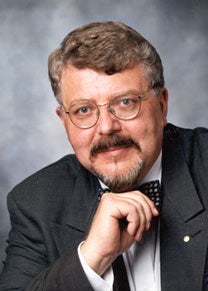
| Dr Sev Ozdowski OAM, Acting Disability Discrimination Commissioner May 28 2004 |
 |
Welcome and scope and objectives of forum
Ladies and gentlemen
Welcome to the Human Rights and Equal Opportunity Commission and to this
forum on health access issues for people with disabilities.
Allow me to begin by acknowledging the traditional owners of the land
on which we meet, the Gadigal people of the Eora nation.
Welcome particularly to our Minister, the Attorney-General, the Honourable
Philip Ruddock, who has kindly agreed to open our proceedings today.
Welcome to all of you, experts from the health sector and the disability
community.
I said when I first wrote inviting you to this forum that I had been
receiving representations seeking action on a range of health issues for
people with disabilities, including:
- health access issues for women with disabilities, with particular
reference to breast cancer screening services; - health access and outcomes for people with intellectual disabilities;
- physical access to medical facilities;
- effective access to health services for people requiring sign language
interpreting in order to communicate.
To this list, the draft agenda I circulated added access issues for people
who are blind or who have a vision or hearing impairment, and we will
also have short papers to discuss today on access issues for people with
mental health problems and for people with disabilities from non-English
speaking backgrounds.
What sort of action might we be talking about on these
issues?
Some of you may have wondered, but been too polite to ask, what is the
Human Rights Commission doing calling a meeting in this area - after all
we do not administer any health programs or budgets.
Before I knew that the Attorney General could be with us today, I was
actually worried that I might be the only lawyer in a room full of doctors,
and that I would only escape by telling as many lawyer jokes as possible.
But in deference to Australia's first law officer and to the seriousness
of the issues on our program I will spare you the jokes.
The Human Rights Commission does have serious roles in promoting access
and equity for people with disabilities in our community, including in
relation to health services.
We have a responsibility to receive complaints that can be made under
the Disability Discrimination Act, and to try to resolve those complaints
by conciliation so that they do not end up in the courts. The Act covers
access to services and facilities, including health services. It also
covers access to premises open to members of the public. Some of the issues
we will be discussing today have in fact been raised, or could be raised,
as complaints in this way.
The Commission also has functions which are aimed at resolving access
issues for people with disabilities on a broader basis without needing
to be pursued as complaints through the legal system.
As you may be aware we can conduct public inquiries into human rights
or discrimination issues, either on our own initiative or when requested
to do so by our Minister the Attorney-General.
I should acknowledge Women With Disabilities Australia for providing
the initial stimulus for today's meeting when they requested that the
Commission consider conducting a public inquiry on access to breast and
cervical cancer screening services for women with disabilities.
I thought that as a first step it was appropriate to convene this national
forum, which could cover access to these screening services but also cover
other key issues in access to health facilities and services for people
with disabilities.
A public inquiry process can be important not only as a means of gathering
information and bringing different perspectives to bear, but as a means
of increasing public awareness and gathering public support for action
on an issue.
A public inquiry would be a significant commitment both for the Commission
and for the disability and health sectors in engaging with the process.
But it remains one of the avenues for us to consider taking if that seems
appropriate and necessary after our discussions today.
Particularly in our work on disability issues, the Human Rights Commission
has tried to create opportunities for co-operation, dialogue and partnership;
for finding solutions through co-operative processes rather than finger
pointing.
Sometimes these co-operative processes have emerged from complaints.
Examples of this were the working parties we convened which led to introduction
of captioned cinema screenings and increased levels of television captioning
for deaf and hearing impaired Australians.
Other co-operative processes have developed in response to a public inquiry.
For example in response to an inquiry which the Attorney-General asked
us to conduct on access to electronic commerce and related issues, the
banking industry convened a working party which developed voluntary standards
for improved accessibility of banking services.
I do not expect that our discussions today will end with complete solutions
agreed to and implemented for every issue raised.
In particular representatives from government and professional bodies
have been invited here to share views and information, not in the expectation
that you will be able to make firm commitments on behalf of your respective
bodies on every issue raised.
What I do hope and expect from the day is that we will work to develop
a common understanding of
- the nature of barriers to equal access to health services for people
with disabilities; - options for addressing those barriers;
- initiatives which may be already occurring , and
- processes we can engage in beyond today to remove those barriers.
It is now my pleasure to introduce to you the Honourable Phillip Ruddock
MP, Attorney-General of Australia, to open our proceedings.

